Hello and welcome to The Compost Bin. I'm Compostwoman and I live with my family in rural Herefordshire. We have nearly four acres of garden and woodland, all managed organically and to Permaculture principles, which we share with Chickens, Cats and assorted wildlife. We also grow a lot of our own food, run courses in all sorts of things and make a lot of compost!

I am a Master Composter and have spent more than a decade as a volunteer Community Compost adviser with Garden Organic and my local Council.
I'm a self employed Environmental Educator so I run workshops and events where I talk about compost, veg growing, chicken keeping, cooking, preserving and sustainable living. I also run crafts workshops and Forest School/outdoor play sessions in our wood.

We try to live a more self sufficient lifestyle here, as best we can, while still having a comfortable life and lots of fun.


To learn more about us click on the About Compostwoman tab and remember to click on the photos to make them full size!


Showing posts with label Zero Waste. Show all posts

Sunday, 9 September 2012

Zero Waste Week - Barn and polytunnel clear out and tidy up


Much like the Study in the house, the Barn tends to be a bit of a dumping ground for all sorts of stuff we want to keep, but don't quite know how or when... so it gets cluttered with empty feed bags, boxes, paper feed sacks, all sorts of stuff basically. I have to periodically have a huge sort out, so I decided Zero Waste Week would be as good a time as any...

Before


After


Pellet bags and Amazon card used to line the Hen houses and nest boxes.


5 Kg buckets waiting for holes so they can become huge plant pots
Big white bin now a rubbish bin but was the outside of our old water softener, which died recently


Poly bags which had held bales of Aubiose ( hen bedding) reused under wood pile and to cover up bales of straw.


5 L containers which had held bulk buys of washing up liquid etc is re used ( after cleaning) to transport water for the hens to drink


I tore up any damaged boxes as they will be great to add to the compost bins.


The Polytunnel has been tidied a bit - all the blighted tomato plants have gone and I have made a start on clearing out the buckets of old growing media,


 but I have been sidetracked by this happening next to the polytunnel....


 So the polytunnel and washing the plant pots has had to wait!


Saturday, 8 September 2012

Zero Waste Week 2012 - Study clearing


Our Study is a lovely room, with a lovely view, but with both Compostman and I working from in there and with it housing a lot of our books and my education and craft stores, as well as a load of other things like household filing and ongoing art and craft items, it tend to get a bit "cluttered".  So I decided to have a sort out for Zero Waste Week.

Before - last Monday


These show my half of the room - Compostman's side was not much better! All a bit of a mess, with unfinished projects and part finished things everwhere.


Stuff I sorted out to be stored in the loft :-)


This pile went to the Red Cross Shop in Ledbury :-) This helped to finish the de clutter of the Guest bedroom as well - it is now as clear as I can get it without removing the bed and wardrobe.


Offerings on Freecycle


And this is the Study after I had finished.today :-)


All clean and dusted and vaccumned. I feel much happier now!

 
Loads of paper put into the recycle bin and all my invoices, filing etc has been sorted out and paid. Compostman and Dear Daughter E also had a tidy up and produced a lot of paper for the recycle bin. We normally have this bin less than half filled over two weeks! This was after one week!


And only one tiny bin of extra waste for landfill generated :-) mainly bits of plastic wrappers, which I am going to see if I can re use or recycle in some way.


 So - I feel this was a very successful de clutter for Zero Waste Week - but what about the Barn and Polytunnel? Watch this space for more details ...


 How did you get on?

Wednesday, 5 September 2012

Zero Waste Week - update

As part of Zero Waste Week, my mammoth declutter and tidy of the Study, Guest bedroom, Polytunnel and Barn is filling up the recycling bins, I have a load of stuff to go to the charity shop, a load of stuff to list on Freecycle and a load of stuff which I can re use somehow - ( those 5 Kg feed bins are going to have holes drilled in the base and become containers for growing herbs/veg in the polytunnel...)

Not much stuff for the Landfill bin so far ( hurrah!)

Before and after photos will follow at the end of Zero Waste Week - but am too busy decluttering to post any now!

How are you all getting on? Any tips to share?

Friday, 31 August 2012

Click here for National Zero Waste week 2012

Yes it is that time of year again, folks! Time to think of ways to reduce your waste.

The fifth National Zero Waste Week takes place week beginning 3rd September 2012. This year’s theme is ‘One More Thing‘ which reminds us that the collective impact of taking baby steps can add up to significant change.


National Zero Waste Week is a grassroots campaign that encourages householders to reduce landfill waste. It was launched in 2008 and more than 100 people took part that year. Everyone was motivated, committed and, most importantly, when the week was over, most kept their new ‘good habits’ in place.

If you want to know more about Zero Waste Week and why Rae Strauss started it, five years ago, then read this article to find out more.


So, how can I join in?

This year we’re focusing on improving our recycling habits because if every household in the UK recycled ‘one more thing’, the total amount collected for recycling could increase by more than three quarters of a million tonnes. So decide on your activity and leave a comment on My Zero Waste telling us what you pledge to do, then come back during National Zero Waste Week and let us know how you are getting on. Be sure to bookmark the page!

If you have a blog or webpage, please help spread the word by writing about National Zero Waste week – you can grab an image on the My Zero Waste website!

If you’re on twitter or facebook, encourage your friends and family to join in too.

FACEBOOK – Join our zero waste facebook page and check out the events page

TWITTER – Use the twitter hashtags #onemorething and #nzww and follow My Zero Waste.

If you have a blog or webpage, please help spread the word by writing about National Zero Waste week – you can grab an image on the My Zero Waste website

Wednesday, 13 January 2010

Making yogurt

Given the very snowy weather we are all having in the UK, I have had a few friends saying to me how hard it is to get certain foodstuffs and one of the most common items which are in short supply are bread, butter and yogurt.

Now we make our own bread and I have a stock of home made butter in the freezer, and yes I do also make my own yogurt, so I shared with my friends how I do it.

And I thought maybe you all might like to know , as well?

I keep a stock of UHT organic milk in out store cupboard, for drinking/cooking but also for yogurt making.

If you use UHT milk you don't need to scald it first...and UHT milk will keep for ages in a store cupboard so it is always on hand.

Yogurt can be made very easily on a small scale with very simple kitchen equipment. It is important to be very clean though!

You will need:
One pint of Sterilised or UHT Milk.
a saucepan or a glass jug if using a microwave.
a thermometer (optional).
2 Tablespoons of live Yogurt.
a thermos flask.
a jug and maybe a basin


Method:
Heat the milk until it reaches blood temperature ( 37° C /98.4° F )either on a stove or in the microwave.
In a jug blend in the 2 tablespoons of yogurt with a little of the warm milk, when a
smooth mixture is obtained, pour into the rest of the warm milk and stir.
If using a microwave I just add the yogurt a little at a time into the jug of warm milk.
Pour the milk/yogurt mixture into a pre warmed wide necked thermos flask, seal and leave for 7 hours ( I have left it overnight before now)

Pour the Yogurt into the basin or into smaller containers with lids cover and refrigerate for at least 4 hours to allow the
yogurt to thicken further.

Yogurt made this way can be kept in a refrigerator for 4 or 5 days.

If wished add pureed fruit or other flavourings to portions before serving.

Friday, 2 October 2009

Oh! Such joy ( well a new recycling scheme, anyway.....!)

Today we had an unexpected delivery. A new Recycling Bin!

You may remember my previous rants on the subject of recycling , in which I mention that we don't get any doorstep collection out here in the wilds of rural Herefordshire.

But,Herefordshire has now decided to extend the scheme to ALL its residents so everybody gets some recyclables collected from their home. (Well, it, and all Councils, are now legally obliged to do so ,
by legislation I helped to campaign for!
)

As an Environmental Consultant and activist I also spent a huge amount of time in the late nineties vigorously campaigning to stop the building of an Incinerator in the town of Kidderminster. This was meant to "dispose" of a large chunk of Herefordshire and Worcestershire's joint household waste. I rather suspect that IF they had managed to build this incinerator I would not now be feeling so happy as "Energy Recovery" from the incinerator would have counted as "recycling". So, I guess, there would have been no Big Green Recycling Bin sitting outside my back door?

But we won the fight against the Kidderminster Incinerator (hurrah) and the Incinerator plan "went up in smoke". And lo, I have a Recycling Bin.

Here it is in all its glory...


along with a calendar, a handy leaflet telling us what we can put in our bin and a sticker to go on the front of the bin.


Here is a list of the items that you will now be able to recycle from your home:

Paper - including newspapers, magazines, phone directories, catalogues, office paper, junk mail, greetings cards and envelopes.
Cardboard - light card and corrugated cardboard, egg boxes and kitchen/toilet roll tubes.
Metals - food tins and drinks cans, aerosol cans and sweet/biscuit tins.
Glass - bottles and jars of all colours.
Plastic - all plastic bottles. Plastic containers including yogurt pots, margarine/ice cream tubs, fruit/vegetable punnets, cream/ custard pots, cake/pastry trays and soup/sauce pots.
Cartons – including milk, juice, smoothie cartons, fabric conditioner, soup, chopped tomato and custard cartons.


So...finally .....we have a recycling bin at Compost Mansions and we can stop filling up our car boots with recyclable stuff "just in case" we go near a recycling point.

We will still need to go to the Household Recycling Site with textiles, batteries, CF lights, wood, electrical goods, soil and rubble etc, but this bin will make SUCH a difference to us! Apart from anything else, the bottles, cans etc can go in the bin, outside, rather than filling up boxes in the boiler room, or in my car boot!

Also the 100g (ish) of landfill waste that we do put out each week at the moment for the landfill collection (all else is reused, recycled or composted here) is largely yogurt or margarine cartons, so we will now be able to reduce the stuff we send to landfill even more, maybe even down to a true Zero Waste level! Previously the recycling system would not take these items, but the building of a new Materials Reclamation Facility has changed all that. |
All collected recycling will be transferred to a new material recovery facility (MRF) being built at Norton, Worcestershire. This new facility will sort materials using state of the art technology into their different types ready for recycling.


So, we will be able to put these items inside our lovely new recycling bin!

Hurrah! I am a very happy Compostwoman, today! Good on you Herefordshire Council, for doing this...!

Thursday, 20 August 2009

Skips, and why I really don't like them.

The roof is now finished on Compost Mansions, and very fine it looks too. Building work is always disruptive but all the craftsmen working here for us were very tidy and helpful and have done a very good job. But the work DID gebnerate a lot of mess and a lot of waste.

When I did a waste free day challenge a few weeks ago, we managed to generate only
20g of landfill waste in a day and 120g in a week INSIDE THE HOUSE, which is pretty good by anyone's standards.....

BUT at the same time. we had 2 SKIPS full of un-reusable, un recyclable stuff from out of our loft work over a period of 8 weeks since the roof work etc started :-(

Which I did not mention. :-(

Most of it was chewed up bits of polystyrene sheet and disgusting dirty, mouldy, wasp nest/ mouse nest/bird nest /dead things filled fibre glass loft insulation dating back from god knows when, it was truly vile and NOT re usable in any way shape or form as far as I could ascertain.

And check I did, dear reader, to see if there was ANY WAY any of it could be recycled

Plus some scraps of wood, too small to re use or recycle, with nails in and all splintered up.

Believe me, we tried to think up ways of using it... (and we are pretty inventive when it comes to re-use here, believe me!) but we failed.

Most of the wood from the loft is going to be re used in one way or another - as a lot of it is 100 year old, untreated timber we are going to burn it as kindling! OR it will be taken to the wood recycling skip at the HWS in Ledbury.


The roof tiles were reused if undamaged and I have rescued any reasonably sized damaged tiles as edging for my raised beds or for use as insect habitats and for doing bug hunts in the Wood. We were also very firm that any replacement roof tiles had to be sourced from second hand reclamation yards, although our wonderful roofing contractor Neil was totally in agreement about this and needed no persuasion!

BUT there were still bits of broken tile and cement which we could not think of a re use....

Compostman has spent a lot of (precious and VERY MUCH not spare..) time taking off nails, bits of iron and zinc roofing "things" from the wood, so we can take them to recycle rather than just binning them in the skip. Lead roofing bits have been kept as they are really very re-usable and useful for making things.


The skip is a "mixed waste" skip and NO ONE is going to sort through it at "the other end" so it is up to us to be mindful of what we throw "away" (But we all know, there is no such place....hmmmm?)

BUT despite all this extra effort on our part, we still filled two skips.

We HAVE only used two small skips, which is apparently very good going (!) for building work of this nature ....but I still felt wasteful every time I walked by it, and saw something I felt I "should" have found another use for, but I couldn't quite think what.

I guess if even Compostman and I can't think of a re use for it all, it probably really IS "waste" and I just have to accept that it IS waste , and move on....But it has been quite hard to live with what is essentially a HUGE dustbin...and KNOW it will all just be tipped into a hole in the ground.

Monday, 6 July 2009

Thank you to Mrs Green

The lovely Mrs Green does a Sunday roundup on her blog, where, she says

It’s that time of the week again when I get to share some great eco friendly stories from around the world.

They will be linked to reducing, reusing, recycling or composting our way to a zero waste future.

So without further ado, let’s see who has been helping make the world a better place this week.


and she has very kindly picked me this week! She has featured my Zero Waste Day efforts.

So thank you Mrs Green and if you DO want to come over and video me doing the forfeit, just shout ;-)

Thursday, 2 July 2009

My (almost) zero waste day..cont...

Thank you to all of you for posting such encouraging, enthusiastic posts!

I am SO glad that you feel inspired to have a go at this as well!
And I would say GO FOR IT!!

And to those of you who though 20 g wasn't enough of a waste to do the forfeit...

well I DID produce some waste so I AM going to do it!

I shall sit in one of my compostbins, as promised...and I shall put up photographic evidence that I have done so..

But perhaps I shall sit in a relatively clean bin, as it WAS "only" 20 g of waste...?

;-)

Wednesday, 6 May 2009

How I make compost

As a Master Composter promoting composting in Herefordshire, on behalf of the Council and Garden Organic, I get asked a lot of questions about how to make compost and what to do with it.

So, in honour of it being Compost Awareness Week, I am going to post ( again) about composting :-)


In this post I am going to talk about how *I* make compost. I will mainly talk about the "Hot" composting method, as that is how I usually make compost. The "Hot" method involves taking lots of material and filling up a compost bin or building up a compost heap in one go. Within a few days, the heap is likely to get very hot to the touch. When it begins to cool down, or a week or two later, you can "turn" the heap. Remove everything from the container or lift the container off and mix it all up, trying to get the outside to the inside. Add water if it is dry, or dry material if it is soggy. Replace in the bin. You could add a lot more material ( if available) at this point.

The heap may well heat up again; the new supply of air you have mixed in allows the fast acting aerobic microbes, ie those that need oxygen, to continue with their work. You can do this several more times if you have the energy, but the heating will be less and less. When it no longer heats up again, leave it undisturbed to finish composting.

The "Cool" method is where you add bits and bobs of compostable material over a longer period of time; it works just as well but takes longer and tends to work best in the summer. It doesn't reliably kill seeds in the same way as the Hot method because it doesn't heat up to a high enough temperature over the total volume of the material. When the container is full - which it may never be as the contents will sink as it composts down - or when you decide to, stop adding any more. Then either just leave it to finish composting (which could take up to a year) or turn it to get more air in and make the fast acting aerobic microbes start to work again.

Whichever method you use, make sure that the contents of your bin or heap is not too dry and add water if in doubt. A good sign that it is too dry is the presence of ants in the mixture.

As you can see from my photos, I use a variety of different bins and have made compost heaps in the past. Bins are good as they allow the material to be contained in one place, and I can also vary the contents to produce different sorts of compost. I have bins which are just grass and card, bins which are slower working and bins which are making very fast, fairly coarse compost for mulching. BUT I have lots of space and a professional interest in compost! (and am a touch obsessed about compost, I grant you.....)

BUT it doesn't really matter what you make compost in! As long as there is air, water and the right mix of compostable material it will produce compost ...eventually

So...this is how I make compost....
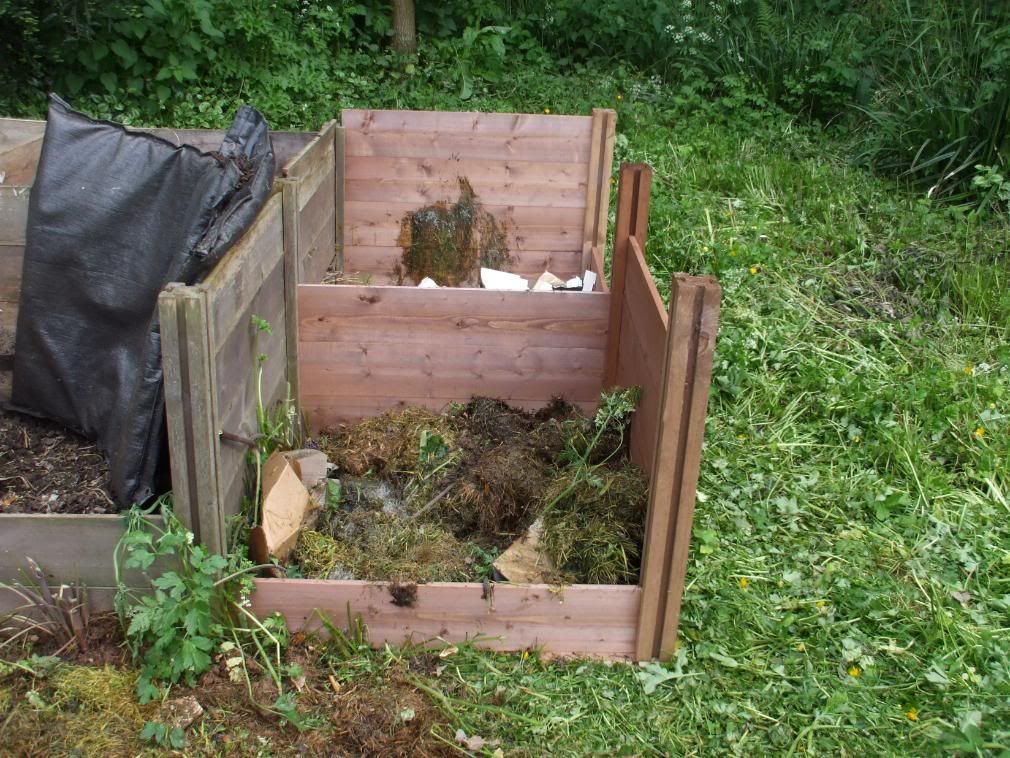


Site your bin or heap in a not too sunny or shady place if possible. If you can, put the bin on the ground. It will still work if you have to put it on concrete, though.
Choose a place where you can easily add ingredients to the bin and get the compost out.

Composting requires a roughly 50 :50 mix of of green sappy stuff ( which is high in nitrogen) and brown, papery stuff ( which is high in carbon). Before you start to fill your bin, try to build up a good collection of "green" and "brown" material if you can, the more you put in a bin at once, the hotter and faster it will work.

In this set of photos, we have just finished cutting down all the spent daffodils and pulling up nettles in the garden so I had LOADS of material waiting to be composted. I also had a collection of old cardboard waiting to be mixed in with the green stuff....It really REALLY helps to build up a collection of "green" stuff and "brown" stuff when filling your bins, as a full bin works more efficiently and composts quicker and hotter, thus killing off any seeds as well.
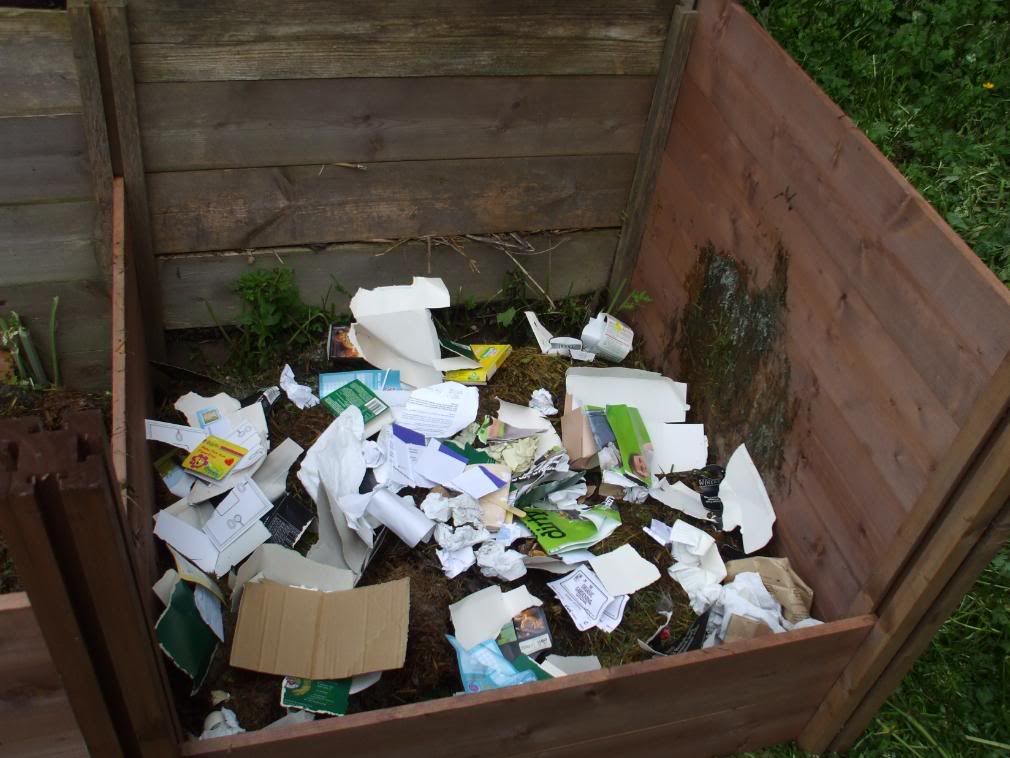


I started off with a layer of well composted bark shreddings from one of the storage bins then added a mix of paper bits and grass clippings. If you are starting a bin in a new area a shovel full of soil is a good idea as it introduces helpful bacteria and other organisms, but it's not essential as I find Mother Nature has an amazing power to sort this out for herself :-)
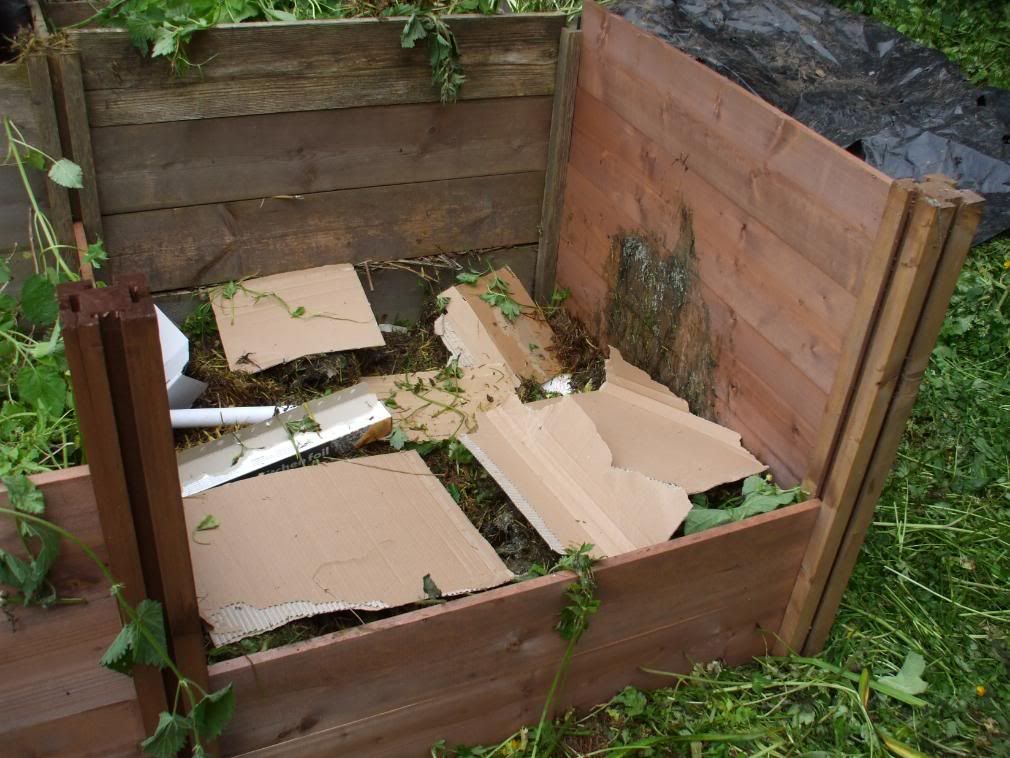


I then added a layer of grass clippings and a layer of very damp cardboard bits on the top. Other green material could be used instead of grass.
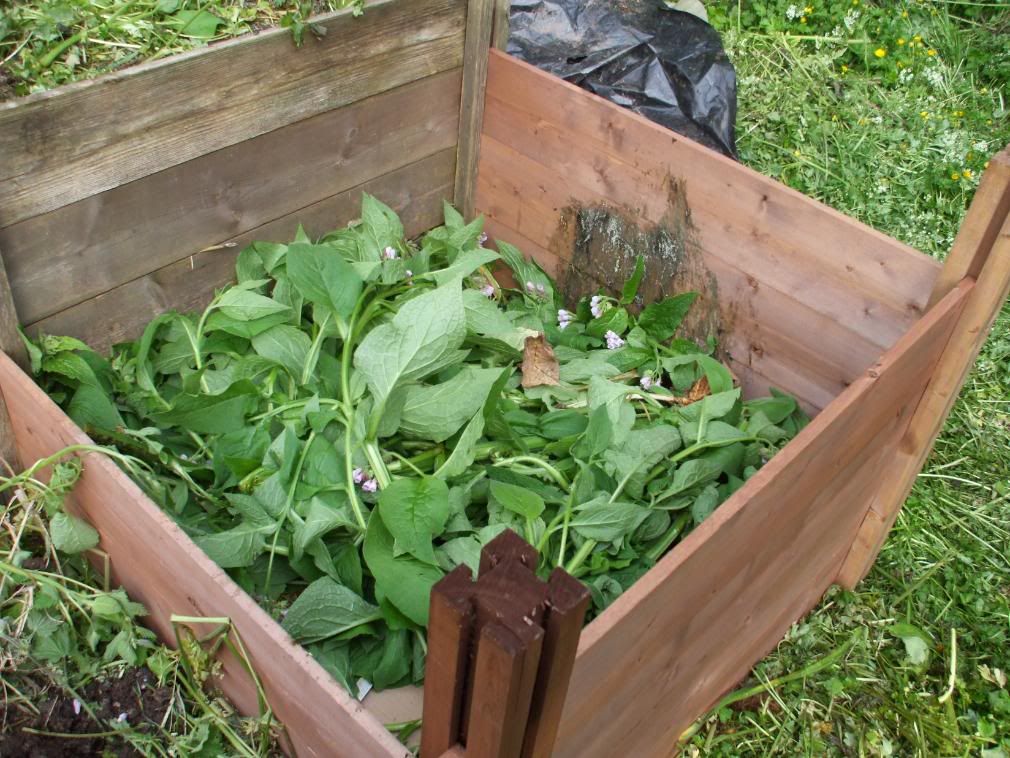


Then a layer of nettles (without the roots- they go in a "weedy " bin to make compost which is only used in the bottom of very deep holes...)and another layer of card on the top....
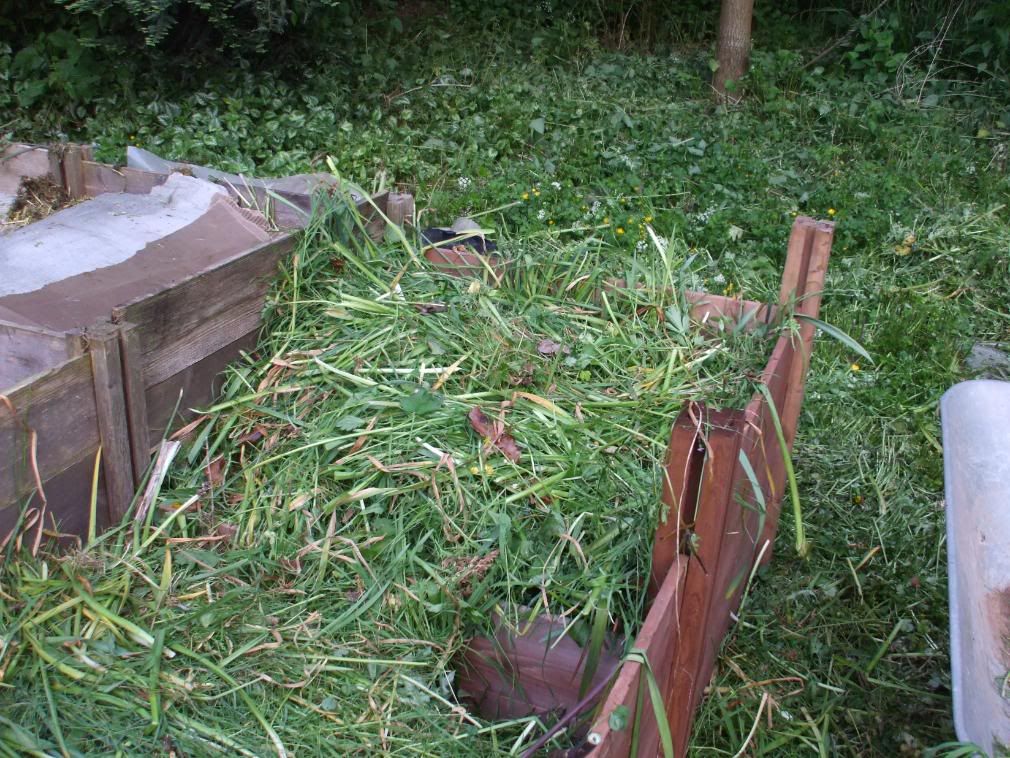


I repeated the layers of green stuff (nettles/comfrey/weeds/grass) and brown stuff (card/paper) until the bins were full to the brim.

The green items contain bacteria which will generate the initial heat that is required by the process. A healthy compost bin is a living ecosystem. By keeping a good mix of green and brown material you will provide the perfect conditions for a variety of fungi, insects and bacteria and can let them get on with all the hard work for you.

This mix will heat up FAST over the next few days, getting up to about 60 degrees centigrade in the middle, and then the material will cool down a little, and slump down. At this point I top the bins up again with alternating levels of green/brown stuff....

If this process is done correctly you don't actually NEED to do any digging out and mixing up (referred to as "turning" in compost speak) to get good compost. The turning process is there to get more air in to your compost material to aid the aerobic (air loving) bacteria in doing their job; but IF you have built the bin correctly, there will be air pockets in it still! you can turn it if you like and it WILL speed things up, but it shouldn't be actually required.

Making compost is really easy...especially if you can get a good pile of stuff together first!

Using this method, in spring and summer I can make acceptable compost in 8 weeks or so. It still needs to be stacked and left for a few more weeks as it is still biologically active and it would be a bit rich for plants "as made", but certainly it has finished composting and can be got out of the bins to make way for more fresh material.

I use the comfrey and nettles I grow (well which grow all over the place by themselves!) and add them to my compost heaps AND make fertiliser teas from them to feed my plants..(BTW Nettles are good BUT always make sure they are of known provenance!...else you might be importing herbicides and we all know where THAT can lead!))

If there is anyone out there who likes peat, well it is perfectly possible to make a good peat free substitute using grass cuttings and cardboard. This is called "Grassboarding" and if it's only grass and cardboard, it makes a wonderful peat like compost....if you have a source of grass and plenty of cardboard this is a very good thing to make. The result can be excellent compost, which is weed-free and does not contain large particles or lumps of material.

I know I have a lot of space and a lot of compost bins BUT all this will work if you only have one or two compost bins! In the picture at the end, can you see the black "Dalek" type bins? They are 220 l or 330 l capacity, and they make wonderful compost! And the "cold/cool" compost method works really well, it just takes longer and you may get the odd weed seed growing in it, so make sure you keep out any nasty weed seed heads you con't want carrying on. I am not soing anything differently here, to what I would do if I only had one or two bins, honest :-)


Compostwoman's top tips to maximise compost making!

To get the ideal compost mix you will roughly need a 50:50 mix
of both "green" and "brown" material in your bin.

I keep a few "browns" bins in the house which I use for all the little bitty bits of card, paper, tissue etc which is too scrappy to recycle, as well as a caddy for peelings, tea bags, coffee filters etc ec in the kitchen.
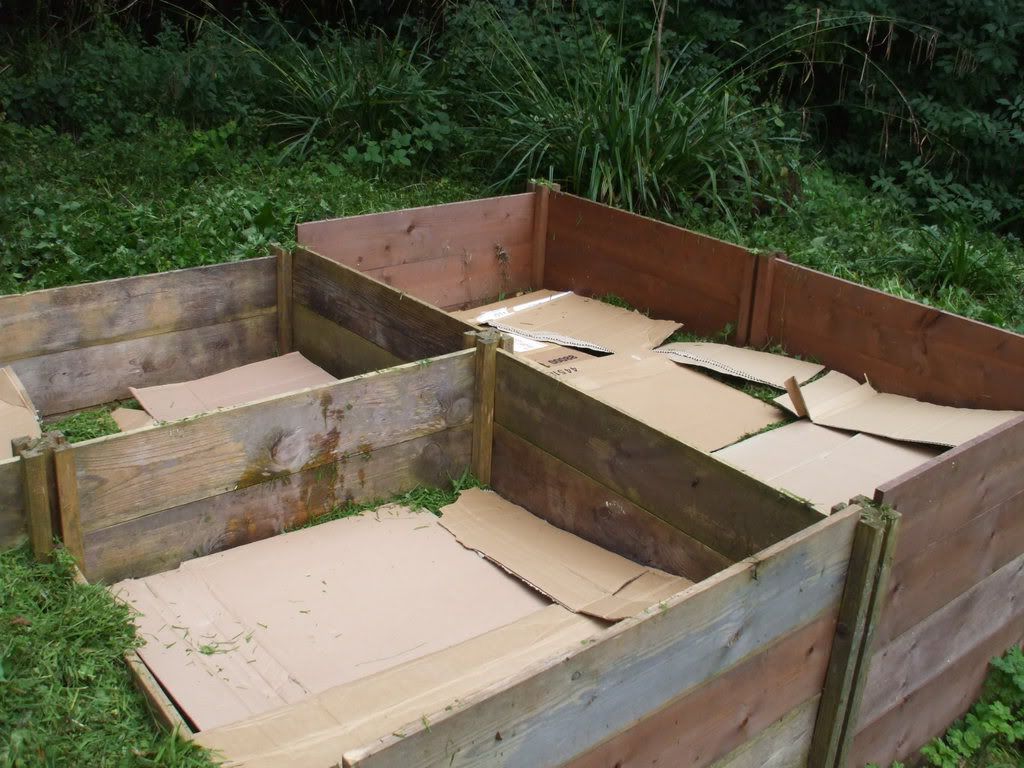
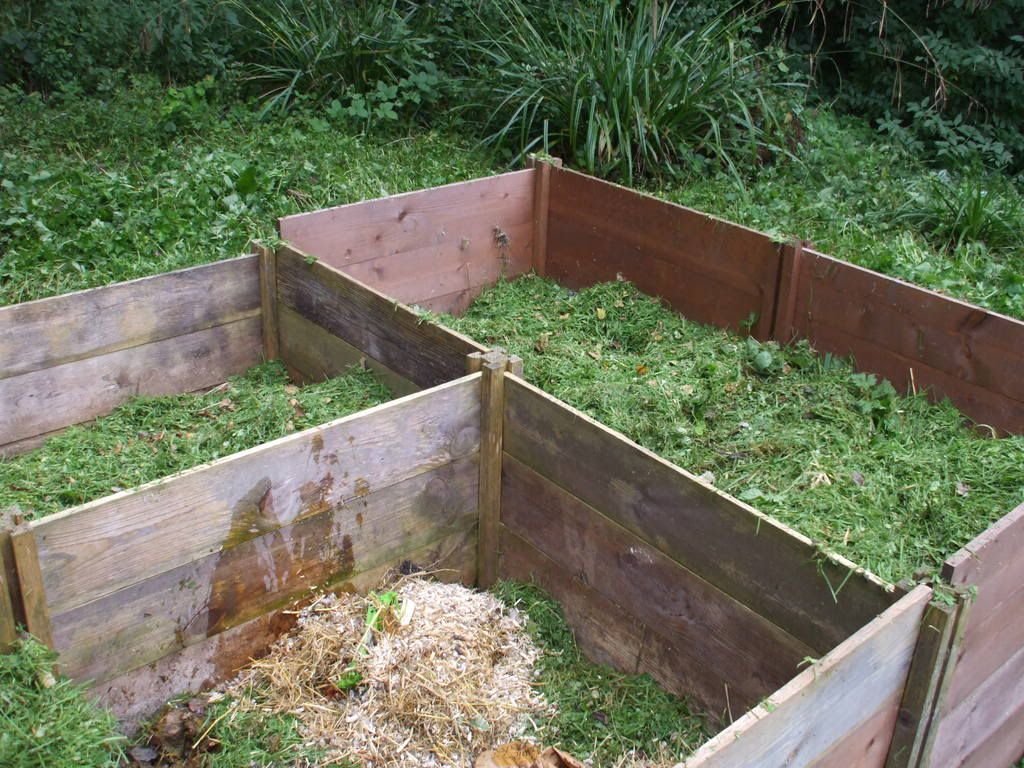


I am always on the lookout for cardboard sheets, from shops or from Freecycle.
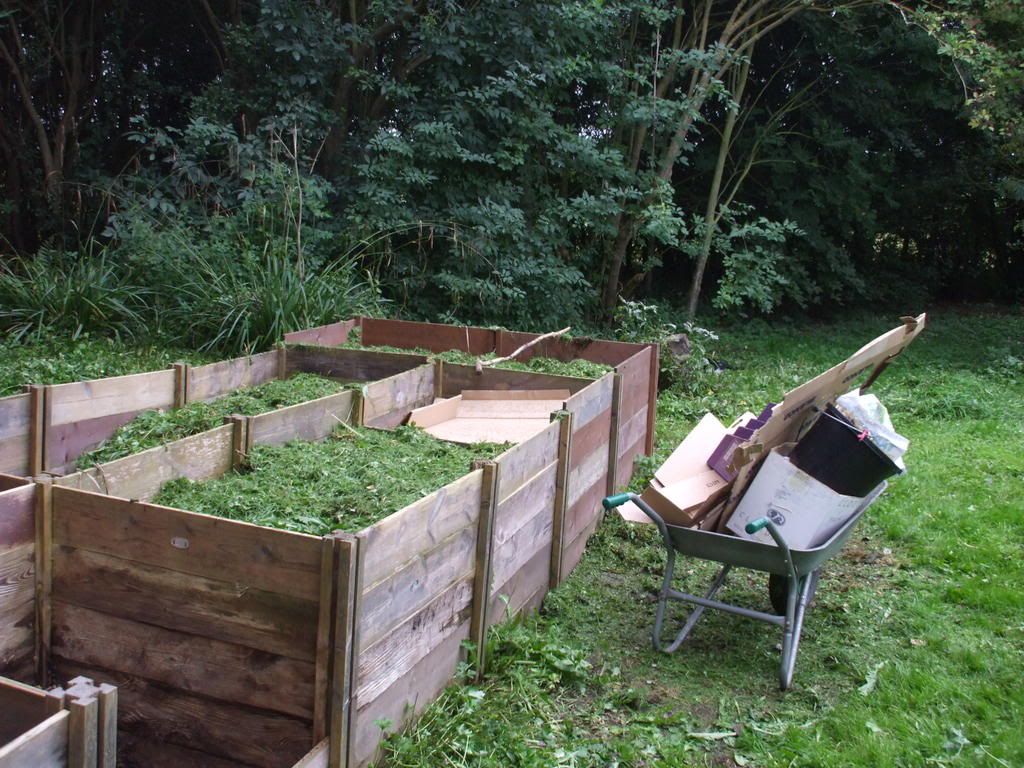


I stockpile various weeds and prunings and grass cuttings from the lawns, until I have a good quantity of raw materials to fill up the compost bins.

By composting everything and anything available it is possible to dramatically increase the amount of compost you produce.

‘GREENS’
● Fruit scraps (including citrus peel)
● Vegetable peelings
● Tea bags
● Old flowers
● Spent bedding plants
● Rhubarb leaves
● Comfrey leaves
● Nettles
● Young annual weeds (e.g. chickweed and speedwell)
● Pond algae and seaweed (in moderation)
● Coffee grounds and filter paper
● Grass cuttings
● Manure (horse, cow, pig, sheep, goat, chicken, rabbit – not too much as could become too wet)

Human urine is a very good activator!

‘BROWNS’
● Tissues, paper towels and napkins (unless they have been in contact with
meat or disease)
● Tumble dryer lint (from natural fibre clothes)
● Old natural fibre clothes (e.g. woolly jumpers or cotton t-shirts
– make sure you cut them into small pieces)
● Vacuum bag contents(as long as you have natural fibre carpets)
● Garden prunings
● Toilet and kitchen roll tubes,
● Woody clippings
● Dry leaves, twigs and hedge clippings
● Human and pet hair (slow to break down)
● Cotton threads/String(made from natural fibres)
● Feathers
● Wool
● Newspaper(scrunched up)
● Shredded confidential documents
● Straw and hay
● Vegetarian pet bedding
● Ashes from wood,paper, or lumpwood charcoal
● Sawdust and wood chippings
● Corn cobs and stalks
● Cereal boxes
● Corrugated cardboard packaging (scrunched up in small amounts)
● Pine needles and cones (although slow to compost don’t put too much in)
● Egg shells (but crush them first to speed up composting)
● Egg boxes (good as they trap air)
Paper and card is usually printed with fairly harmless inks now (in the UK at least) and I certainly don't worry too much about that, as anything in there is well diluted and a lot of inks are ( I understand) vegetable based now, with the glossinesss being from clay particles. But if you are worried, perhaps steer clear of very glossy magazines? They can go in the recycling bin


When the various ingredients you have put in your container or heap have turned into a dark brown, earthy smelling material, the composting process is complete. It is best left for a month or two to 'mature' before it is used as it is a bit biologically active to apply to plants straight away. Don't worry if your compost is not fine and crumbly. Even if it is lumpy or sticky with bits of twig and eggshell in it, it is still quite usable. It can always be sieved before using if you want. Any large bits can be put back into your new compost heap.
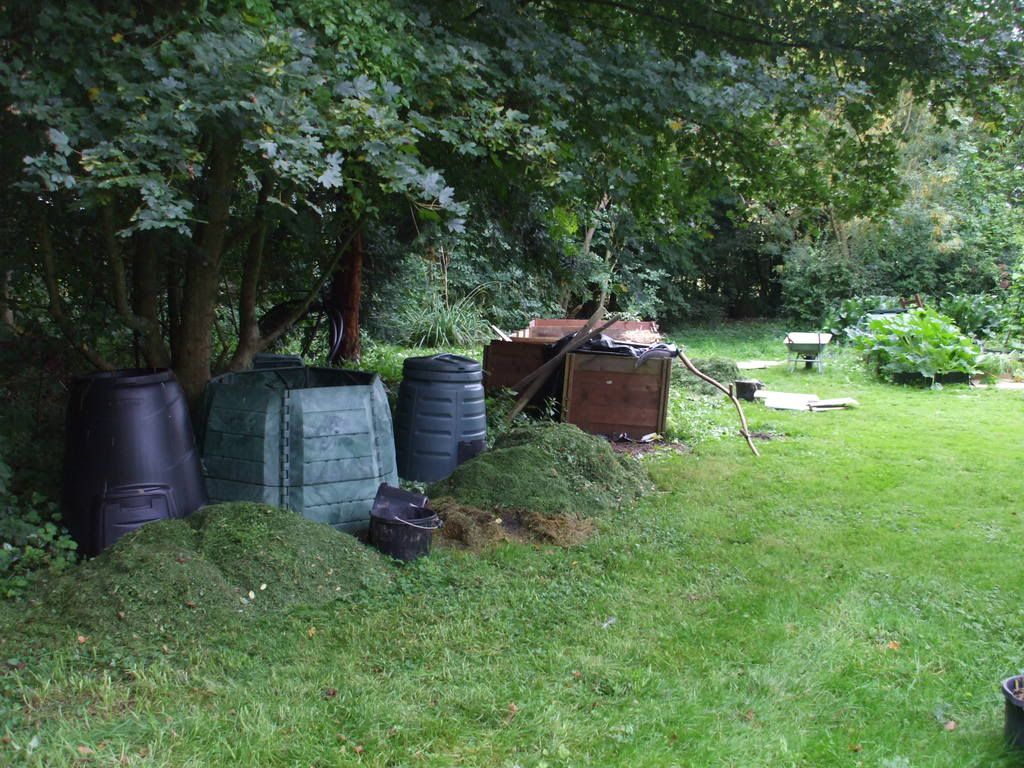


I hope this has been helpful, I shall talk in the next post about removing and using your compost and also how to make leaf mould.

Happy Composting!

Monday, 19 January 2009

Meeting The Green family and a Zero Waste Roadshow

On Friday Compostman and I went over to nearby Newent to visit the Zero Waste Week roadshow in Budgens supermarket ( and do a bit of shopping as Budgens in Newent have lots of nice stuff and carry a huge range of local, organic foods)

AND to meet up with The Green family from My Zero Waste!

They are a lovely family! We all had a general chat then Mrs Green and I nattered ninteen to the dozen about waste, recycling, composting and so on (as you do) and Compostman and I gave Little Miss Green some eggs from "the girls" before we all parted.

We all then chatted to the wonderful people on the Gloucestershire CC Zero Waste Week roadshow

Here are Mrs Green and Aunty Rubbish!


Aunty Rubbish is the lovely lady on the Zero Waste Roadshow.

and then we talked composting ( well there's a surprise....)


here we are talking about composting!


Zero Waste Challenge Week 2009 is a really good idea, This is what they are asking Gloucestershire residents to do

Zero Waste Challenge Week 2009


Want to play a part in something new and exciting?

Sign up to our Zero Waste Challenge and help Gloucestershire reduce the amount of waste that ends up in landfill.

Zero Waste Challenge Week is all about reducing the amount of waste you throw away in your dustbin in one week. The week will be held week commencing the 26th January to the 1st February 2009.

Zero Waste means that nothing gets thrown away in the dustbin. As well as trying to cut down what we use, it also means that we try to only use things that we can reuse, recycle or compost. That way we’re left with nothing else to throw away in the bin.

We believe that if you make enough changes, it is possible to achieve a Zero Waste Week. However, the aim of the challenge is to see how close you can get. Circumstances are different for everyone and even if you don’t quite manage to achieve Zero Waste, you will find that you have a dramatic effect on the amount you throw away.


So, if you are reading my blog and you live in Gloucestershire, why not join in? You get some lovely goodies and you might win a prize!

Well done to all who have signed up and here’s hoping more than 1000 people have already joined!

I am most impressed with the Zero Waste Week stuff, just a shame I can’t sign up (wrong postcode) but I am working on my Council (Herefordshire) to do the same.
We are doing our own personal version of Zero Waste Week, as we started weighing our landfill bin again at the start of 2009, we haven’t done it for a bit and it is something that you have to keep an eye on, or “stuff” starts to slip in again and before you know it your bin has has put on weight. So far we are pleased with our continued efforts. I will post more on this at a future date.

So, anyway, a good day out for Compostman and I, we went to a nice nearby market town, met some lovely, like minded people ( you are lovely, Green family!) did some shopping, visited a roadshow, and then had lunch in the pub in Dymock.

A very satisfying sort of day.
UA-40361266-1