Hello and welcome to The Compost Bin. I'm Compostwoman and I live with my family in rural Herefordshire. We have nearly four acres of garden and woodland, all managed organically and to Permaculture principles, which we share with Chickens, Cats and assorted wildlife. We also grow a lot of our own food, run courses in all sorts of things and make a lot of compost!

I am a Master Composter and have spent more than a decade as a volunteer Community Compost adviser with Garden Organic and my local Council.
I'm a self employed Environmental Educator so I run workshops and events where I talk about compost, veg growing, chicken keeping, cooking, preserving and sustainable living. I also run crafts workshops and Forest School/outdoor play sessions in our wood.

We try to live a more self sufficient lifestyle here, as best we can, while still having a comfortable life and lots of fun.


To learn more about us click on the About Compostwoman tab and remember to click on the photos to make them full size!


Showing posts with label Compostwoman. Show all posts

Thursday, 1 May 2014

May Day


So, May Day already! I was up early to bring in the May and greet the sunrise.


I spent a lot of this afternoon getting plants ready for sale at the Blossomtime event this weekend - two days of celebrations of cider and apples and the beautiful fields full of apple trees in blossom we are lucky enough to have around here.


I now have around 100 mainly tomato plants ready to sell with the profit going to Garden Organic.


I also spent a fair bit of time washing the very last of the pots. I set up a washing station at just the right height for me to wash things without hurting my back, which made the job a lot easier.


I just need to sort out all the leaflets and seeds and stuff I need for my composting stall at Blossomtime and  I will be ready for my first "Compostwoman" event of the year :)


Tonight there was a knock on the back door - some people had seen a chicken up the lane and stopped to ask if it was mine - nice of them - so I walked up to have a look.


I spotted this handsome little fellow - a Silkie or Polish Bantam, but he would not let me catch him. I telephoned some neighbours but he was not theirs and he had gone the next morning. I do hope he found his way back home and was not eaten by the fox.


This is the view up the lane past our house, as you can see we have no near neighbours!


Friday, 7 June 2013

Busy being Compostwoman

Its been a busy week for my alter ego, Compostwoman.

On Wednesday I spent all day at  with 13 Herefordshire Primary Schools at an event to celebrate World Environment Day and Eco Schools, along with representatives from Water, Cycling, Waste minimisation, Healthy Living, Global Perspectives and other good stuff. I, and several other Master Composters , were there as "Others" which covered Green Woodworkers, Recycled crafts, h Energy, Nigel Hand ( again) with assorted wonderful reptiles and us with planting, bug hunts in the compost and the compost food chain.

It was a terrific day and the children seemed to really, really enjoy themselves :-)

I have also been preparing for a very busy weekend - I am at The Garden Festival, Hellens  this weekend, along with a team of Master Composters - yet again I am the organiser for the MC's, so have a lot of preparation and planning to do to make sure our stall is really good and everyone is happy with what they are doing :-)

I am also setting up the stall and taking it down again on Sunday.

And giving a talk on Sunday afternoon.

So my mind is FULL of compost at the moment :-)

But I hope to have time to look around the wonderful stalls there, and especially to go and listen to Brigit Strawbridge talk about Bees :-)

Off to take some of the stall to Hellens - it is a beautiful June summer evening here

Hope you have a lovely week end, whatever you do.


Monday, 2 July 2012

Master Composter and Master Gardener Conference, Garden Organic, Ryton


One of the highlights of my year is always a trip to Ryton to the wonderful Garden Organic HQ. Around 200 of we volunteer Master Composters and Master Gardeners, Seed Guardians, Compost Ambassadors etc etc  gathered on Saturday at Ryton to meet up, network, be thanked for our efforts, be inspired and learn something new.

I got up bright and early to catch my lift with a fellow Master Composter, it took us quite a long time to get to Ryton, but we arrived and registered, got coffee and collected our name badges, lanyards and conference pack. Inside the sturdy (compostable strong paper!) bag were samples of Clipper tea, a small but perfectly formed Green and Black chocolate bar ( well, it was until I ate it, that is!), some organic seeds, a delightful notepad and pencil and some useful catalogues. Much more use to we gardeners, and better environmentally, than a plastic wallet with a plastic pen!

Most importantly there was ( as always) a really excellent programme telling us all the good things which were going to happen during the day.

The event was held in a huge marquee, in the wonderful gardens.I met up with other Master Composters from Herefordshire and Worcestershire - 11 of us went altogether from our scheme.


Pretty impressive walk to get from registration into the marquee!


We were welcomed by Myles Bremner, the Chief Executive of Garden Organic,  who thanked us for "doing what we do"  - it is always nice to be told  your efforts are appreciated, even though we know Garden Organic do appreciate us and look after us very well.

Linking all the speakers for the day, as well as speaking herself, was Dr Margi Lennartsson, Head of Programmes at Garden Organic. She had a key role in developing the Master Composter and Master Gardener programmes and is always worth listening to! She kept everyone "on time" as well - which was impressive.

We then had a fascinating presentation based on research, done by Coventry University, on the impact of the Master Gardener scheme over the first 2 years. This looked at responses from both the volunteer Master Gardeners and the households involved. The research work really showed up just what a huge positive benefit it is to people when they start to garden/grow their own food. The research showed huge (measurable against "official" standards) increases in self esteem, and  increased general "feel good" factor - not surprising, maybe,  but I really hope we see this research given a very high profile in the media, in due course.

Then it was time for coffee and our choice of morning workshop - there were 9 choices and I went to "Waste Not Want Not" which was given by  Rosy Grant. Rosy was involved in setting up the "Food for Life Partnership - a network of schools and communities commited to transforming school food culture. The workshop was very informative and good fun - on how to waste less food, store it wisely and get more value from what we buy to eat . It linked in very well with the "Love Food, Hate Waste" training I did a couple of years ago.

Lunch was delicious vegetarian food, wonderfully presented, the food is always wonderful at Ryton. This year it was provided by ChangeKitchen, which is a social enterprise, registered as a community interest company. It was set up by a well-established Birmingham charity, which works alongside those who are socially excluded or disadvantaged, empowering and supporting people to meet their short and long term goals.


I chatted to a few friends I don't see very often and then, as the weather stayed good over lunch, I had a wander around the grounds.


I love love LOVE this flower meadow  - every time I  go it is wonderful. Want one like it!


Huge plant pot, always makes me smile.


Bulk Composting area and yes I did go in and have a good look around. There is also a new display Garden Composting area with lots of different bins and techniquest on display


This Bee Garden was absolutely "buzzing" with activity and the scent was wonderful.


So colourful!


The allotment garden, I really like the tilt top cold frame.


Such beauty. It was all so interesting - ways to prevent slug damage, how to protect the structure of the soil, companion planting - everything one could possibly want to see, demonstrated in a manner which is doable by "ordinary" gardeners at home.


And not a chemical in sight!

I also went to a lunchtime talk on "Comunity Composting for local food" given by Cath Kibbler of The Community Composting Network (CCN) - this is a two and a half year project funded by the Big Lottery Local Food Programme. CCN are setting up a training and support network with 12-15 training hubs across England with associated trainers who will be delivering a doubly accredited training course to local food growing groups so they too can start community composting.

The talk was thought provoking and interesting and I hope to do a more in depth post about it at a later date - I am a CCN member so went and had a good chat to Cath on the CCN stand later on.


After the lunch break we were treated to a performance of "Compost - the mini musical"  from Anneliese Emmans Dean and York Rotters  - which was absolutely BRILLIANT. So funny and creative! If you can go and see it I recomend doing so. It is also available to purchase as a teaching tool .

When we had all calmed down a bit from the excitement of "Compost - the mini musical" we had an excellent talk from Chris Collins , the "Blue Peter" gardener - only as his talk demonstated he is SO much more than just that one title! He was excellent - amusing and informative with an infectious passion for what he does.


We then had the Awards and Graduation ceremonies. I was lucky enough to be nominated for the Innovation and Social Media Award in the Master Composter catagory and as you already know - I won. Wiggly Wigglers provided my prize - gift vouchers - which I will enjoy spending . I was, and still am, SO pleased about this award - I have been a finalist in all the catagories in past years but never won, before. It was a good day for the Herefordshire and Worcestershire Master Composters in general as another of our group, Jeremy Thomas, won the Master Composter Achievement award.

I also "graduated" as a Master Gardener - which means I met the requirements to talk to lots of people about my passion for growing veg, mentor a certain number of households in their veg growing  and log a threshold number of hours doing so. Not difficult to do and great fun doing it!

After yet more refreshments ( Clipper teas and coffees, very nice!) it was time for the afternoon workshops, again a choice of 10 different workshops were available.

My choice of workshop was held in The Vegetable Kingdom building  and was about "Storing and Preserving your Harvest" . Even though I do a fair bit of preserving it was still really interesting and informative and I learnt some new ideas.  Andrea Jones, who gave the presentation, is a moderator on the Grow Your Own forum and really knew her stuff. We got "hands on" making some pickled courgette which we got to take home - yum!


We went back to the main Marquee for a wash up session ( literally as it was raining, again!) , the raffle (I didn't win) a final look around the various demonstrations stands and farewells. I had an interesting chat to Johannes Paul from Omlet - he was there with their new wormery the Hungry Bin . which looked really interesting. I was also very impressed by The HotBin composting system - it looked like a good product which could deal with all kitchen waste - including cooked food scraps.


So, that was my day at Ryton. I got back home at 7.30 pm, tired and hot but SO inspired by the day.

We didn't get to make "thank you" speeches at the awards -  ( thank goodness ) but I would like to say a few now. Thank you to all the staff at Garden Organic for making it such a wonderful day out and also thank you to all my fellow Master Composters/Gardeners  for being such a terrific group of people to work with!

I also want to thank the individual members of the Garden Organic team who are involved with me on a day to day basis -  and special thanks must go to my Council Waste Management team for all their support -  they manage us on a day to day basis and are wonderful.- thank you all.

And a big thank you to YOU, my readers - it wouldn't be half as interesting on here without you...!

Wednesday, 11 January 2012

My CV

B. Eng. (Hons), MICHT, AIfL
Enhanced CRB FAW/Paediatric /Outdoor Working/Epi-pen First Aid Certificates

Sarah works as a self employed Environmental Educator and Forest School Practitioner. She has worked as a Play Ranger for her local Wildlife Trust and she occasionally teaches environmental education on a supply basis at a local Environment Centre. Sarah is a trained RSPB Wildlife Explorers group leader and has lead highly successful after school  eco/gardening clubs for several local schools. In addition Sarah offers workshops in making craft items from natural or recycled materials and provides training for adults in various Forest School type activities.

Sarah has extensive woodcraft skills and experience gained from owning and managing a small private woodland, which contains a Forest School site and is a source of sustainable wood products. She has a long-standing love of the natural world and possesses an excellent working knowledge of native flora and fauna. Sarah is a First Aider with extra outdoor working, epi-pen and paediatric first aid qualifications. She also has Food Hygiene and Fire Marshal training.

Sarah is a Master Composter, Master Gardener and Food Champion; a volunteer community advisor working on behalf of Herefordshire County Council and Garden Organic to promote organic gardening, home composting and food waste reduction to the general public. She also has experience of managing a small flock of free range, organically cared for chickens; is knowledgeable in various other smallholding skills and is a skilled jam, chutney, wine and cider maker. Sarah offers training in gardening, composting and chicken keeping skills.

Before taking a career break to have a child, Sarah worked as a self employed holistic therapist and organic produce grower but has also in the past run her own business as an environmental advisor, researcher and advocate. She had a previous lengthy career as a research scientist and project manager in a Government establishment and is a highly qualified, experienced and articulate graduate engineer.

Sarah was a finalist in the 2007 and 2009 CIWM Annual Awards in the “Individual Recycling Champion” category as well as a finalist in the Garden Organic “Master Composter of the Year” 2008 and 2009 awards. Sarah won the Garden Organic "Master Composter Innovation and Social Media" 2012  award

Education/Training Qualifications:

Education: (date/qualification)

June 2010  CTLLS Certificate. Uni of Warwick
April 2010  PTLLS Certificate. Uni of Warwick
April 2009 Forest School Practitioner/Leader OCN Level 3.

July 2000  IIHHT Diplomas, Aromatherapy, Indian Head and Body Massage.
July 1989  B.Eng. (Hons) Materials Science and Technology, Birmingham
July 1986  HNC Electronic Engineering, Worcester Technical College.
July 1984  ONC Electronic Engineering, Worcester Technical College.
July 1978 8 GCE “O” levels, Worcester Girls Grammar School.

Training: (date/qualification)

June 2011  FAW course(Renewal)
June 2011  First aid in the outdoors/Epi pen use. (Renewal)
Mar 2011 Master Gardener. Garden Organic accredited course.
Nov 2010  LGBT training, HCC course
Oct 2010   Diversity training, HCC course.
June 2010  Paediatric First Aid Certificate/Epi pen use (Renewal)
May 2010  Health and Safety Level 2 Certificate, CIEH, Anubis Training.
April 2010 Safeguarding , HCC training course.
Feb 2010   Risk Assessment, Anubis Training
Feb 2010   Fire Marshall, Anubis Training
Oct 2009   Disability Equality training, HCC course.
Sept 2009  "Playing on the Range" Playworker Level 2 Certificate, Uni of Gloucs.
Oct 2009   Fundamentals of Food Hygiene Level 2 Certificate, RSPH  PCT Training, Rotherwas.
June 2009  Food Champion training with WRAP.
April 2009 Food For Life Partnership training with Garden Organic.
Sept 2008  FAW course/Epi pen use, Anubis Training.
July 2008   First aid in the outdoors/Epi pen use. Anubis Training
Nov 2007  Introduction to Forest School OCN Level 1 Certificate, Cambium Training. 
April 2007 Paediatric First Aid/Epi pen use. Anubis Training.
April 2007 RSPB Wildlife Explorers Club Leader, RSPB HQ.
Jan - June 2007 Playwork NVQ Level 3 training Herefordshire PCT.
April 2006 Master Composter. Garden Organic/CIWM accredited course/cert.

Key Skills:
Sarah demonstrates excellent academic, practical, communication, presentation and negotiating skills gained from the wide variety of work she has undertaken. She is

 Highly skilled in providing both practical and theoretical environmental/sustainability/gardening/smallholding information tailored to the age range of the target audience/workshop/class/group, in an engaging, amusing, playful and informative way.
 Demonstrates very high practical, academic and professional abilities and knowledge in a very wide range of fields.
 Is a  good communicator with very effective presentation and report writing abilities. Has had much one-to-one contact with the general public in a variety of environments.
 Is an experienced speaker, well used to organising and chairing large and small public meetings, holding workshops and training courses, presenting evidence at Public Inquiries, dealing with the media, giving live and recorded TV and Radio interviews and writing press releases.

Saturday, 6 February 2010

A day out with fellow composters....and a really good talk!

Back from a lovely day out at a social gathering of Herefordshire and Worcestershire Master Composters held at Worcester Woods Country Park. We had a fabulous talk from a member of the Countryside Services, Senior Greenspace Officer Wade Muggleton, on his amazing recycled garden

Wade is a local award winning gardener and writer. His talk was titled "Gardening like a Womble! a talk on permaculture and gardening"

Wade has travelled extensively in New Zealand & Australia, visiting and working on organic farms and permaculture projects. He “walks the talk”, having spend the last 7 years developing his own small garden into an intensive food producing plot that contains more than 23 kinds of fruit and about 20 types of vegetables. “Grow It” magazine awarded him their coveted “plot of the year” award in 2009 and he writes for Permaculture magazine.

It was a really good talk, as Wade said, “if we use small garden plots and allotments we reduce carbon emissions, waste, transport and pollution.” He is the most amazing skip diver, vegetables and fruits were flourishing in an amazing variety of containers and raised beds. As you might expect from an audience of Master Composters, we then had a lively question and answer session .

We had some lovely lunch, followed by a workshop, again headed up by Wade, on making willow structures such as obelisks and hurdles. We all had a really good time and, as always ,I came away enthused and energised by these gatherings with like minded folk.

Wade demonstrating how to make a willow obelisk


Also no hens were killed today and it was lovely weather.

So all in all a good day!.


Master Composters cutting willow.


Finally, if anyone reading this lives in Herefordshire or Worcestershire, the Waste Management team are looking for some more people to train as Master Composters? So, if you are interested, give me an email and I can give you more details?
Me and my lovely willow obelisk.

Wednesday, 23 September 2009

Master Composter Conference 2009

One thing I DID enjoy during the 6 weeks in the summer when I was not blogging, due to illness, was going to the 2009 Master Composter Conference at Garden Organic in Ryton. This is always a really good event and full of inspiring speakers. Mixing with several hundred fellow compost enthusiasts is always a treat as well!


I went to a wonderful workshop on insects given by Peter Smithers, co author of a really good book of bug ID. The workshop was wildly oversubscribed and there really were not enough microscopes etc which was a shame but he gave a fascinating talk and was very informative. He also gave a talk to the whole conference about how little is known on the insects etc which actually live in a working compost bin and so we Master Composters are all going to be part of a very large scientific survey to establish what,species are actually in there. Very exciting!

I was yet again nominated for awards, I made it into the final 3 for the Master Composter Achievement Award and also Herefordshire and Worcestershire Master Composters were finalists for the Master Composter Group Award, although I/we didn't actually win... but still, an honour to be nominated!

Alys Fowler gave an interesting talk


and also presented awards and cut the cake, she was very interesting and friendly to chat to as well. Wiggly Wigglers sponsored a wonderful cake, made in the shape of
(you guessed it!) a Can O Worms wormery! It was very tasty and not at all wormy!

Alys cutting the cake...


I was very tired by the time I got back home that evening,as I really was not feeling very well but it was good to go and share my passion for all things composty with a few hundred like minded souls. I also had a lovely wander around the gardens, they were stunning in July!


Wildflower meadow with the Giant Flowerpot in the middle!


Look out for me in the Oct edition of "Grow Your Own" magazine as well ;-)

Sunday, 20 September 2009

Michael Chapman played a gig at our local pub...

we actually went out JUST Compostman and me earlier in the week, to a gig! We went to see Michael Chapman, an amazing guitarist singer songwriter....who was appearing at our local pub, The Walwyn Arms ! Compostman first encountered Michael back in the very early 70's when he played at a folk festival Compostman was doing the PA for...and we have been to see him a lot over the last 35 odd years...(eeek) but since we had Compostgirl we have only been out together 4 times in total. ..and not to see him... :-(

so we really enjoyed ourselves on Tuesday :-) especially as Compostgirl went on a sleepover with her best friend from school!

It WAS fun! to be a grown up again, to get dressed up( a bit, I put on clean jeans and a nice top and some lipstick!) and go out somewhere with lovely Compostman..and talk about grown up stuff :-)

Wednesday, 24 June 2009

Recycle Week 2009

Recycle Week is an annual event to kick-start new habits that can help us all to all waste less and recycle more. In 2009 the theme for Recycle Week is 'let's waste less...' encouraging all of us to try something new in an effort to go greener and cut back on the waste we all produce. As the WRAP website says
From recycling more of everyday items like glass and plastic bottles to reusing carrier bags or composting at home, there are lots of opportunities to promote how we can all reduce the amount of waste we send to landfill.

"Recycle Week is now in its fifth year and this is the first time we'll be promoting a waste reduction message" said Jane Hall from Recycle Now. "As part of this we're encouraging people to sign up and pledge to either try something new or do more of what we already do".

Across the country there will be lots of events taking place to highlight local recycling services and ways that can help us all do our bit.

You can find out what is happening in your area by entering your postcode on the Event finder.

Whatever pledge(s) you choose to do - your efforts really will help to make a difference.

Thank you


I found it difficult to pick a pledge from the short list, because I already do all the stuff they list! I wanted to write my own pledge, which involved salvaging as much as possible from the builders skip in the garden , but there didn't seem to be that option.

So I finally went for promising to have a waste free day, which seemed a little more challenging than, say, promising to compost all my waste veg ;-)

It is all a very good idea, and if I fail in my promise, I have said I will go and sit in a compost bin!

Tuesday, 16 June 2009

A very catch up post!

Gosh, I have not posted for more than a week!

The reason being, it is *that* time of the year! Like many of you I am madly busy in my veg patch, the first crops are now ready to harvest (new potatoes, carrots, broad beans, spinach, courgettes, shallots and onions, strawberries, cucumbers, salads.....) and weeding weeding weeding is a priority!

As is grass mowing and compost making...Compostman has been scything the long grass and the comfrey today, and I have been filling up the newly emptied compostbins.

The compost has been dug out of them to go in various raised beds, and I have been planting climbing french and canadian beans up beanpoles cut from our own woodland ( feel very smug about this!) as encouraged by the Small Woods Association, of which I am a proud member! and who I occasionally work for...If you want a great place to go, visit the Green Wood centre in Coalbrookedale, its wonderful!

In the last 10 days I have also done 5 full days of Master Composter stuff which I organised, booked, transported the display etc to and from (and made sure the lovely other Master Composters had a good time )


This is me joining in the drumming at the World Environment Day stands at The Big Event.

I spent Sat and Sun this weekend just gone at Hellens in Much Marcle, at The Garden Festival, which is the Hereford Waldorf School Summer fair. A wonderful place and a very worthy cause to help, and it is a pleasure to go and do a stall at such a lovely event.

While I was there I did an interview on BBC Hereford and Worcester..click here to listen...go to 45 mins into the programme.

Last week I started the first session of a new Eco Club I have been commissioned to run at a school near Bromyard and I went to a meeting of the new Transition Town Ledbury group and have been asked to join the Steering Group, to help get things "transitioning".

So lots of outside activities going on here, must be because it is approaching Midsummer! I DO feel energised and buzzing with life at the moment, I must say, despite still feeling a bit rough from the nasty flu bug thingy.

At Compost Mansions, as well as all that harvesting and weeding and compost moving and making, I have earthed all up the spuds again, harvested a lot of new ones, planted out climbing beans, mowed(with the push mower!) around the edge of the veg patch and I have cleared all round the clearing and log circle in the wood. I have potted on numerous brassicas and salads both for home and for the school garden use.

I am preparing for a couple of days of school party activities in the wood at the end of this week which is very exciting. I have also been writing course notes and brochures and web pages for my environmental activities in the wood and I have planned a series of courses to be held here in the wood in 2010, training early years practitioners in "having fun in the woods" type of stuff.

AND we now have a house wreathed in scaffolding, as we are having a few bits of work done/doing a few bits of painting on the roof and up the top of the walls and Compostman is going to be putting up THE SOLAR PANELS !!

Yes, the ones which he was going to do last year, but then he had to have an operation so couldn't . But now he is well again and we are SO excited about the fossil-fuel-free hot water we will be getting.

Having scaffolding and building work going on does make it more "challenging" to try to get on with anything, however......

And sadly as a result I have been unable to do much in the way of housework AT ALL as there is too much other stuff to do..

So thats a shame ;-)

Friday, 5 June 2009

Fri 5th June The Big Event and more composting advice given out


Today (Fri) was very successful in Hereford High Town, we had lots of visitors


and children planting seeds,


and I had a good look around The Big Green Bus. It was full of very interesting stuff! I also met up with someone I haven't seen for a long time, the dynamic originator behind the Big Green Bus and its charity The Big Green idea . the lovely Brigit Strawbridge. (yes, Brigit from the TV programme)

Brigit handed over 2 Bokashi bins she had very kindly collected from another friend..so I now have a "full house" of different composting methods (compost bins, wormeries, bokashi, green cone, green joanna....)

The rest of the various stands were also really interesting and I learned some new stuff ( always a good thing...)

On Sat 6th June I shall be in Hereford on the King George V meadow doing my Compostwoman bit to promote composting at home. I am doing this (with other Master Composters) as part of Hereford Earth Watch, a 2 day event celebrating World Environment Day.

Saturday's event is more of a general festival, with a big music event !

I shall be there from 12 noon until the end so if you are in the area come and say "hello"

Thursday, 4 June 2009

Love Food, Hate Waste training day, what an eye opener!

Well, I was invited to attend this training , as I am a Master Composter (a community Compost Advisor working to promote home composting) and I thought it sounded interesting and a complementary activity to my "compost your compostibles" campaign....

I had to keep a food waste diary for a week before the training day (which was very interesting and informative, it turns out we don't really waste any food BUT largely beacuse I have "birds" and cats to feed odd scraps to, and we compost EVERY SCRAP which can be composted..so we came out as unusually low food wasters....as did all my fellow Master Composters and Council Waste Officers on this course! ( not a big suprise there, all the MC's are dedicated RRR people as are the wonderful council officers!)

The training was really good we learnt lots of useful stuff , had a really nice lunch and networked like crazy! AND learned a lot as the course detail was vey good and informative.....I found myself speechless ( seriously!) several times during the presentations and the later role play scenarios....


Here are some extracts from the (properly assessed) studies done by WRAP ..I asked some quite hard questions about this and am satisfied the study was pretty well organised!


In the UK in general

Total food waste = 6.7 million tonnes PER YEAR in the UK

Read that again..6.7 MILLION TONNES PER YEAR!!!!

Which breaks down to ...

Avoidable food waste = 4.1 million tonnes 61%
Possibly avoidable food waste = 1.3 million tonnes 20%
Unavoidable food waste = 1.3 million tonnes( peelings etc) 19%
Which OF COURSE should be composted!


Foods thrown away whole and untouched every day

Potatoes 5.1 million a day
Sausages 1.2 million a day
Slices of bread 7 million a day
Yoghurt & yoghurt drinks 1.3 million a day
Apples 4.4 million a day
Half of the salad we eat !


Avoidable food waste = 4.1 million tonnes (£10.2 billion)


Avoidable food waste = 4.1 million tonnes (£10.2 billion)
“cooked or prepared too much” 1.3 mt (£3.4 billion)
“left & unused” 2.6 mt (£6.3 billion)
“unknown” 0.2 mt (£0.5 billion)

“left & unused” -

Storage

“less than ideal” location
 bread in the fridge (11%)
 bananas in the fridge (6%)
 apples outside the fridge (74%)

“Unprotected”
 sliced meats unsealed after opening (13%)
 dried foods unsealed after opening (11%)
 cheese unsealed after opening (7%)

Incorrect fridge temperature
 60% don’t know what it should be (average is 6.6°C vs. target of <5 data-blogger-escaped-br=""> Lack of knowledge about what can be frozen
 Not making sufficient use of the freezer

Date labelling
 Food “gone past its date” is the main reason given for throwing away food
 Almost 50% do not understand the meaning of date labels (FSA, 2008)
 36% treat “best before” as a “use-by”
 53% never eat past the date for fruit & veg
 56% never eat past the date for bread & cakes

Confidence
 “use by” = use by end of that date
 Almost 10% leave a days “buffer”
 21% will not “take a risk” with a product close to its date, even if it appears fine

Cost per household per year ( ie this is what could be saved if you didn't do this kind of thing...)

average households with children £610

Households of adults £380

Households of unrelated sharers £520

Single occupant households £250

WOW that is a LOT of dosh!


A really thought provoking fact..... food waste is the equivalent of 18 million tonnes of carbon dioxide

That is the same as produced by one 1 in 5 cars on the road! THINK about it!


Also it is no good blaming "the old" " the young" etc....

As age isn’t really an influence, we’re all wasting food! 1.2kg/person/week…

nor is Household composition, Household with children is the same as a household with just adults (per capita)…

and nor is Household size! Only significant difference is single households at 1.9
kg/person/wk

We’re all wasting food! BUT 84% of us believe we throw none or hardly any food away!


So...doing this training means I now have a better idea why so much food is wasted and I can help people get the very best from the food they have shelled out their hard earned money for...

How to store it so it lasts, how to cook just the right amount, how to store any leftovers and use them up next day and how to perhaps shop so as to minimise waste!

all this AND save cash and eat good food as well!

If you are interested in this, see Love Food Hate Waste for more details!

I shall certainly be adding the LFHW leaflets and banners to my composting related stalls over the summer!

Being a food lover means getting the most from the food I buy. It is not about having gourmet cook intentions, but about being grounded in everyday simple actions that can help me manage and cook my food so that more gets eaten and less gets wasted.
It pays on so many levels – I save money, feel better and more confident, save time and I help the environment too.

The habits of a food lover
1. Check fridge first - try to make a shopping list ( and stick to it!)
2. Keeping food fresh - most fruit is best in the fridge, but bananas are better outside of it.
3. Judging the right amount – get a mug for rice - work out a measure which works for your circumstances! Use a spagetti "hole" to portion what you need in one go!
4. Freezing and frozen foods –what freezes & for how long? If you grow your own or buy in bulk, how to best store it? Open freezing? Dehydrating? Bottling? jamming? pickling?
5. Use-By and best before – what needs eating first? Learn! Be more self reliant! Sniff and look and trust your judgement BUT be aware of Use by dates for meat and dairy etc as they are there for a very good reason ( to stop you getting food poinioning)
6. Free-lunching – taking well stored leftover food outside the home to eat for lunch the next day ( mmm yum! I LOVe pasta salad next day...)
7. Leftovers – new meals from leftovers, store them correctly to be safe!
8. In-store – frozen v fresh/ right size of pack/ offers - are they as a good a deal as they seem?


For more information on food waste
www.wrap.org.uk
Love Food Hate Waste www.lovefoodhatewaste.com

Monday, 1 June 2009

General catch up

Well it has been a bit manic here at Compost Mansions recently, hence the lack of posts since last weekend..(which was actually a post I did a week earlier but hadn't actually hit "post" on it....)

First, at the start of the last week I got ill...very ill....with a nasty flu-ey thing which I am only just recovering from now...I missed 2 days "outside" work ( grrr, but working with children, I couldn't either ethically contemplate dosing myself up and going, nor was I actually well enough to do so anyway...)

I was chilled, sweating, aching, sore throat, headache, sick, had the runs and generally felt like I had been hit all over by very angry, big people with very big sticks......( and NO, I have NOT been in contact with any one recently returned from anywhere overseas, or from areas where Mexican Flu had hit in the UK....I DID wonder about volunteering myself as a possible case BUT I didn't meet the NHS criteria , so I didn't...)

I have been ill for 10 days now and I only JUST feel vaguely human today....and have missed the last few days of the term and most of this half term....

Also, we have been so busy with growing and planting and sowing and mowing and scything etc...I dragged my self out of my sick bed at one point to prick out plants and had a lap tray on my knee whilst on the sofa, so I could pot on some tiny brassica seedlings......I have still been tending to the plants in the polytunnel and the hens, despite being ill....Compostman had so much to do.. so who will do it if *I* don't?

COMMENT

One of the downsides of an "idyllic" rural lifestyle is, unless you have pots of money and can afford to pay staff to do stuff for you, you have to keep going regardless of illness. I didn't do any stuff for 4 days when I was really ill, but once I was "sort of " ok, I had to get on with at least some of it...as Compostman has more than enough of his own work to do, without having to do *my work* as well..Compostgirl helped a lot, but at 8, she really can't just step into my jobs and do them like me....she can water stuff and collect eggs but she doesn't know what to do if anything more tricky presents itself...

People often don't consider this aspect of living "the rural dream of downshifting"...they think of a few hens, some pigs, a veg garden, a greenhouse and being more self sufficient in fruit , veg and eggs etc ...BUT its a 24/7 dedication, 365 days a year...regardless of illness, incapacity or inclination...YOU have to keep going....that is the reality if you keep any livestock.....or grow a lot of stuff to eat...if you want to eat it, you have to look after it!

END COMMENT

The hens have all mysteriously gone off lay...I am only getting 2 or 3 eggs from 6 laying hens..I think it is because the 2 cockerels are fighting and generally being a pain..and disturbing the hens...so MEASURES WILL BE TAKEN......(!)( use your imaginations..they have had a reprieve while I have been ill.....)

Various "work stuff" has also been going on for me, I finally got my Forest School Practitioner Certificate through in the post yesterday (hurrah!) AND I am about to start a regular programme of Eco Club sessions somewhere, for a fee...which is great....! (I could do with the money)

I have also been arranging a weekend of Master Composter activity (as in ALL the arranging, of the stand, the booking, the rota, the supplies, the session plans, the risk assessment etc...) at Hereford Earth Watch, which revolves around World Environment Day on the 5th June, and also carries over on the 6th June.

I am also organising (as in ALL the organising, the booking, the rota, the supplies, the session plans, the risk assessment etc...) the Master Composters presence at Hellens Manor, The Garden Festival in the 13th and 14th June.

AND I am doing some "Love Food Hate Waste" training this week.....

(To be honest, I feel tired just contemplating the next 2 weeks, and I haven't even started it yet.....)

BUT its all good stuff and will help to spread the word about living a more sustainable, frugal minded life...

Oh, did I mention the Transition Town Ledbury stuff?...no? ....more in a future post!

Do something on World Environment Day? Please? If only to make me feel my shattered-ness is having an effect?

I shall post some links tommorrow...........promise....but for now it is off to bed for me.....

Thank you...

:-)

Friday, 8 May 2009

What to do with all the lovely compost you have made.....


As a Master Composter promoting composting in Herefordshire, on behalf of the Council and Garden Organic, I get asked a lot of questions about how to make compost and what to do with it.

So, in honour of it being Compost Awareness Week, I am going to post ( again) about composting :-)


So, after my last compost post you should all have an idea how make good compost (assuming you didn't, already :-)) )and all the things you could be putting in to make it work really well....

I removed the wooden slats from one of the bins the other day, to see how my friends the worms and insects and microbes were getting on with composting...and see what I found! Decomposing stuff up the top and then a beautiful layer of freshly made compost all the way down to the bottom of the box. Ah, the magic of compost. Throw in stuff which is waste and get out for free a valuable resource, which you would otherwise have to pay for!

This is a compostbin filled up in Oct 2008.

But how do you tell when it is ready? And what do you do with it when it is ready in the bin, like this? Well, your compost is ready when it looks dark brown and soil like and smells nice and earthy. It should also be slightly moist and have a crumbly texture.

It probably won't look like the compost (growing medium) you buy in the shops and yours will still maybe have twigs and eggshell in it but don't worry... it's still perfectly good to use and you can simply sieve out any larger bits and return them to your compost bin.
So, dig it out and if you can, leave it to mature for a month or two, as fresh compost can "scorch" soft plants if used immediately.

Your lovely compost is food for your garden and will help improve the soil structure, maintain moisture levels and keep your soils pH balance in check while helping to suppress plant disease. Compost has everything your plants need, including nitrogen, phosphorous and potassium, it improves your soil's condition and your plants and flowers will love it ( and you for giving them it!)

The compost at the bottom is ready. It looks like soil, smells sweet and has few "bits" left undecomposed in it. There may be egg shells and bits of twig left ( and corks!) but apart from that it has all turned into wonderful, rich compost.

Using your compost in the veg garden

Use about 1 wheelbarrow load per 5 sq m, applied in the spring and summer. Dig it in to the top 15 cms or leave it as a surface mulch. I apply my home made compost at a depth of about 3 cm on the soil but I have lots to spare. I often also put some on the autumn after lifting crops, I then cover with cardboard or geotextile and let the earthworms drag it down into the soil for me.

I also use a generous layer of my home made compost in the bottom of potato and bean trenches.

If you don't have enough compost to do all the veg patch, concentrate on the potato, bean, curcubit and green leafy veg areas. As part of a crop rotation your whole patch will eventually get some compost.

Another experiment in progress! As you know I make a LOT of compost...so I use these raised beds to put it in , grow in it and then at the end of the season put the spent compost on the veg garden and start again with filling the empty raised beds next spring.


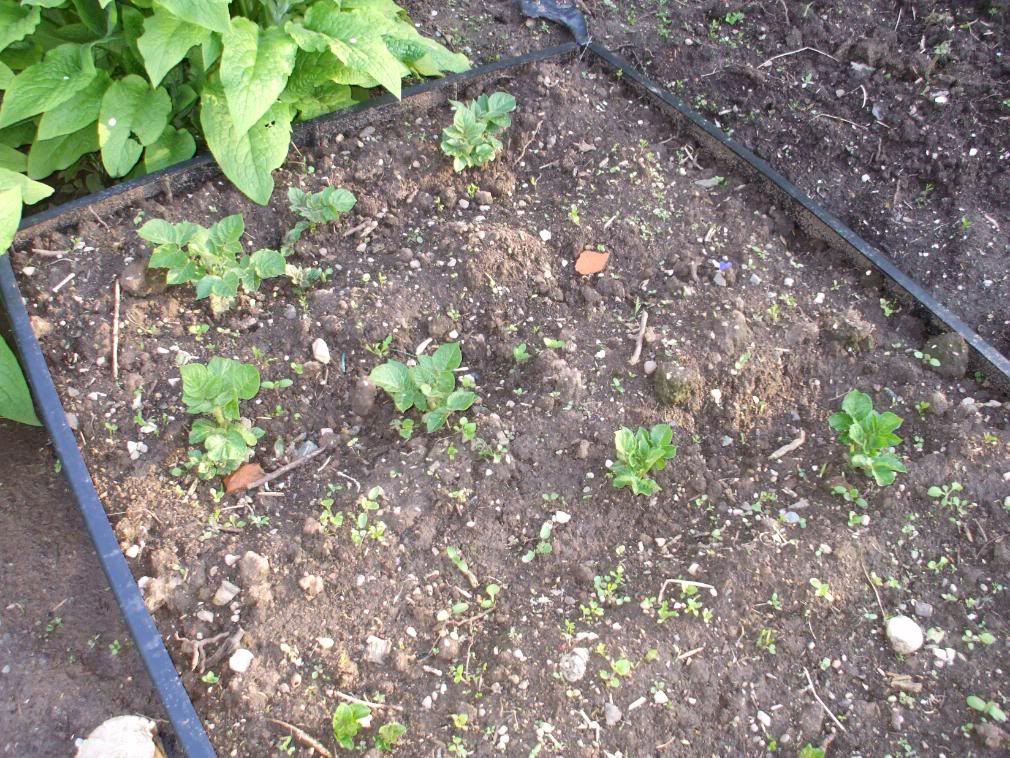
SO...this bed has lots of lovely home made compost in it and I am using it to grow early spuds and artichokes in it.


One advantage of doing this is that IF your compost still has weed seeds left, you can see them as they germinate and simply hoe or pull them out....


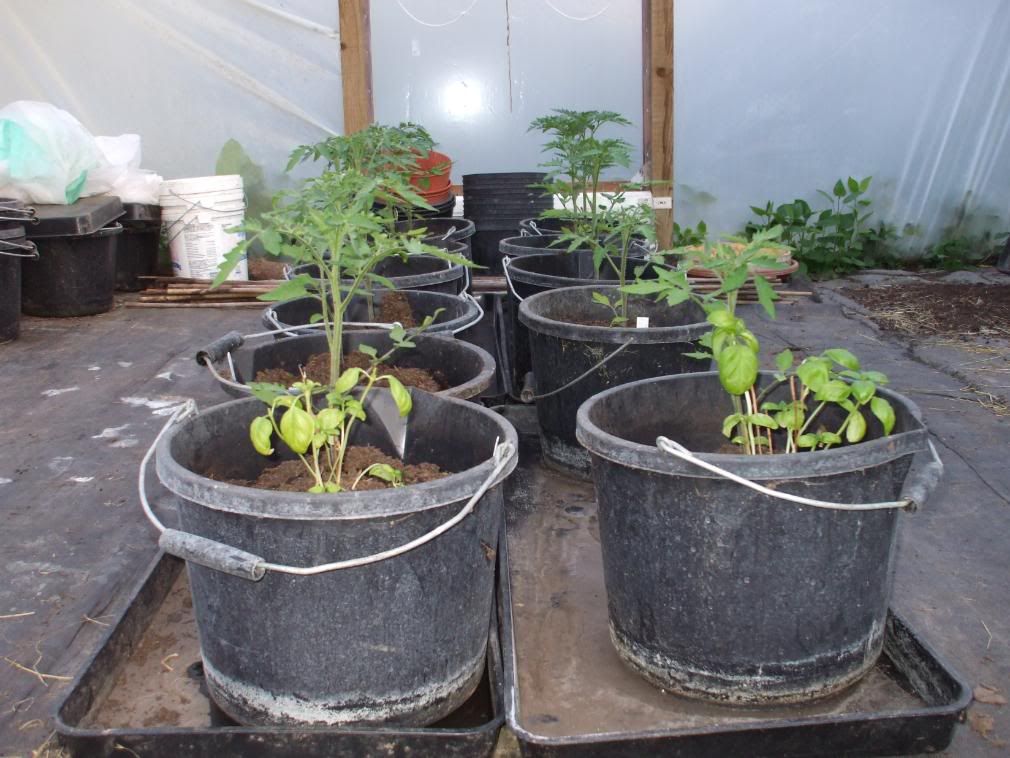
I also grow the indoor tomatos and peppers and aubergines in large pots standing in trays inside the Polytunnel. The reason being that the polytunnel (erected by the previous owners, not us!) was sited on a load of subsoil and rubble dug out from when the garage was built...so the ground is NOT suitable to grow directly into! Even *I* can't work any kind of miracle with it....

I use builders buckets with holes drilled in the base as large pots and plant into them, it works very well, and then the compost also goes on the veg garden at the end of the growing season.

I now grow exclusively in my own compost, in 2008 I experimented to see if my home made growing medium was as good as commercial peat free potting mix, and I found MY mix gave me earlier and better yields from the same sowings of the same varieties with identical treatment...so this year I am only buying in growing medium to sow seeds into. Once they are plants I will transplant them into my home made growing medium , of compost:loam: sand.

May 2 2008


18th May 2008


In addition to making all this compost in bins I use lots of cardboard/paper to cover my plot when the soil is bare, to stop loss of precious nutrients and to provide some organic material as it rots down...I mulch directly with grass cuttings on fallow soil, and plant green manures WHEREVER I can to promote fertility and add humus to the soil.....

Other ideas for using your home made compost.

If you have plants in pots outdoors you could top dress the soil with a layer of home made compost. Take off the top few centimetres of existing soil and add your home compost. Leave a gap around soft stemmed plants. This will give your plants food and is a great way to make them more healthy.

Dressing your lawn with compost helps young grass take root and can make your garden healthier and greener. First, sieve the compost and remove any large twigs or other bits that have not quite broken down. Then mix it with the same amount of sharp sand : compost (to spread it more easily). You will need a layer of about 2.5cm. I use a stiff broom to brush it into the grass. Mature lawns can really benefit from this dose of nutrients but be careful as newly seeded or turfed lawns can be scorched by it.

Compost is great for your fruit trees and they will be very happy if you spread a thick layer of home made compost around the roots of the tree, as will any soft fruit trees. A 5-10cm layer around the roots will provide important nutrients and can protect against drought and disease. Avoid the base of the tree and do not spread too close to the trunk. This will also suppress weeds growing around them. Doing this once or twice a year will help your trees grow taller and bushier.

Using your compost as mulch is a great idea. Use your 'rough' compost (where not everything has completely broken down) over flowerbeds and around shrubs to help prevent soil erosion and replenish nutrients. Use a layer of 5cm, leave a gap around any soft stemmed plants and if you do this after rain or watering, you will help keep the moisture in the soil.

Digging a 10cm layer of compost into the soil prior to planting will help your new plants and flowers bloom. If you have already planted, simply spread a thin layer of compost-enriched soil around the base of the plants. Nutrients will work their way down to the roots. Remember to leave gaps around any soft stemmed plants.

Spread up to a 5cm layer of compost over your boarders to give them a feed! Earthworms will quickly like get to work mixing it in for you, or you can dig your finished compost into the soil prior to planting. Remember to leave gaps around any soft stemmed plants.

So, I hope this has given you some ideas for things to do with your home made compost and you will all be spreading your compost soon. After all just THINK of all the money saved by making your own soil improver and potting mix!

Also, just think of all the waste diverted from going into Landfill if you compost...think of all the Methane which our waste is NOT producing in the Landfill! Methane is 23 times more potent a greenhouse gas than Carbon Dioxide, remember!

And hopefully you will all have even better crops as a result of using your lovely home made compost.

For more ideas on composting, go here, or here,

Happy Composting :-)

I am now a no show at the Compost Awareness event in Hereford

I agravated a long standing back injury lifting tables and trays of plants last weekend..and now I can't drive, or do much at all...so lovely Compostman drove me to school today and helped at Eco Club this afternoon...

because today I was scheduled to be teaching in the organic garden at School, I had Reception class scheduled to be out in the veg garden, planting potatos, carrots, beetroot and shallots.

Yesterday I had Gardening Club (juniors) out in the garden over lunch break planting potatos, beans, carrots, peas and beetroot. Then during the afternoon I was showing year 1 children how to plant up their raised veg bed with onions, carrots, turnips, potatos and beetroot, all with the theme of "purple"

I also, today had Eco Club and we did some pond dipping , which was great fun!

But, painful....and I wouldn't have managed it without Compostman's help.

Unfortunately due to my ( very painful) back injury I will also not, now, be at the Compost Awareness Week event in Hereford Fri.

Sorry! especially to Kim, who was going to come and say hello I know..

so...its rest, and recovery, and NO digging for me...

This is a really bad time for me to have an injury, as apart from all the stuff needing to be done here at Compost Mansions, there is a major re vamp of the school garden this weekend as well...moving the fence out to make the plot bigger, a new greenhouse, new raised beds..oooh all sorts of stuff ...and I am meant to be there digging and moving and dismantling compost bins and laying terram sheet and mulch and all sorts...

but I suspect I will be making the tea, instead :-( Grrr, bluddy back injury, I have had this for 40 years now, am Sooooo fed up its not true...mumble mumble mutter curse........)

Wednesday, 6 May 2009

How I make compost

As a Master Composter promoting composting in Herefordshire, on behalf of the Council and Garden Organic, I get asked a lot of questions about how to make compost and what to do with it.

So, in honour of it being Compost Awareness Week, I am going to post ( again) about composting :-)


In this post I am going to talk about how *I* make compost. I will mainly talk about the "Hot" composting method, as that is how I usually make compost. The "Hot" method involves taking lots of material and filling up a compost bin or building up a compost heap in one go. Within a few days, the heap is likely to get very hot to the touch. When it begins to cool down, or a week or two later, you can "turn" the heap. Remove everything from the container or lift the container off and mix it all up, trying to get the outside to the inside. Add water if it is dry, or dry material if it is soggy. Replace in the bin. You could add a lot more material ( if available) at this point.

The heap may well heat up again; the new supply of air you have mixed in allows the fast acting aerobic microbes, ie those that need oxygen, to continue with their work. You can do this several more times if you have the energy, but the heating will be less and less. When it no longer heats up again, leave it undisturbed to finish composting.

The "Cool" method is where you add bits and bobs of compostable material over a longer period of time; it works just as well but takes longer and tends to work best in the summer. It doesn't reliably kill seeds in the same way as the Hot method because it doesn't heat up to a high enough temperature over the total volume of the material. When the container is full - which it may never be as the contents will sink as it composts down - or when you decide to, stop adding any more. Then either just leave it to finish composting (which could take up to a year) or turn it to get more air in and make the fast acting aerobic microbes start to work again.

Whichever method you use, make sure that the contents of your bin or heap is not too dry and add water if in doubt. A good sign that it is too dry is the presence of ants in the mixture.

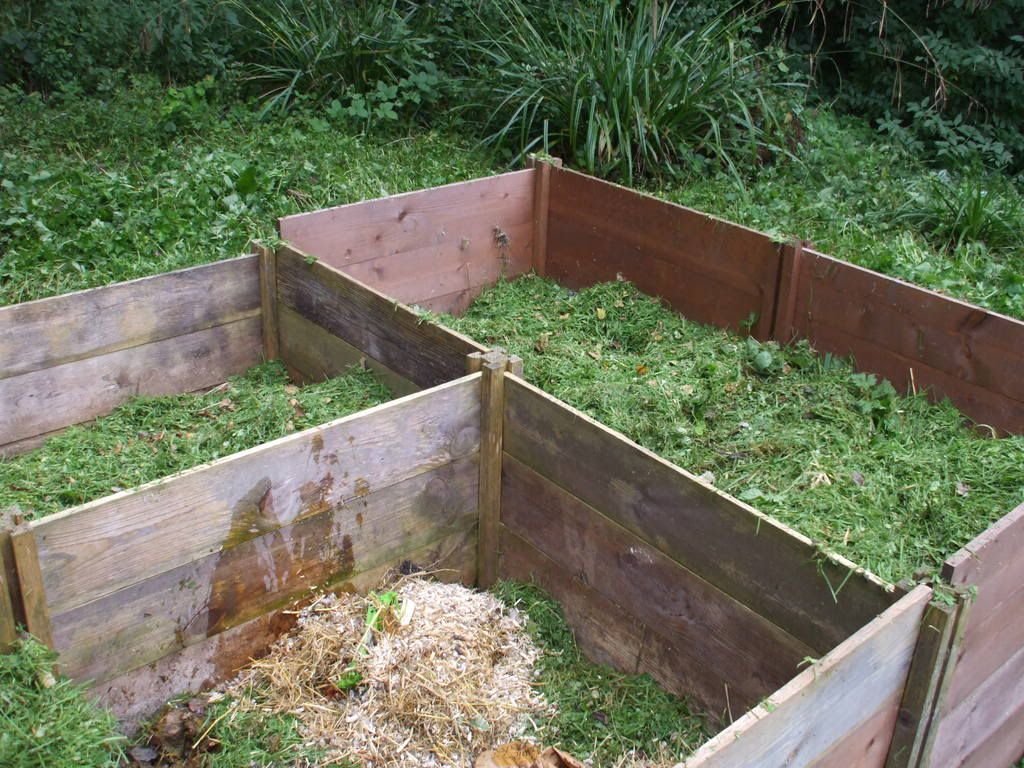
As you can see from my photos, I use a variety of different bins and have made compost heaps in the past. Bins are good as they allow the material to be contained in one place, and I can also vary the contents to produce different sorts of compost. I have bins which are just grass and card, bins which are slower working and bins which are making very fast, fairly coarse compost for mulching. BUT I have lots of space and a professional interest in compost! (and am a touch obsessed about compost, I grant you.....)

BUT it doesn't really matter what you make compost in! As long as there is air, water and the right mix of compostable material it will produce compost ...eventually

So...this is how I make compost....
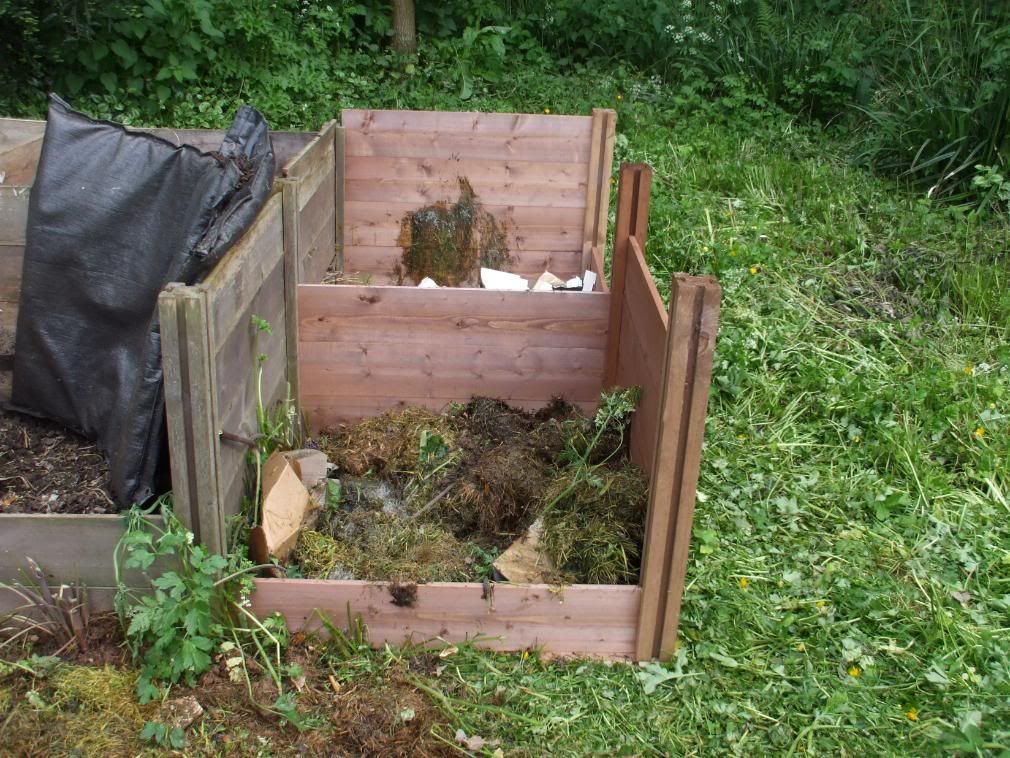


Site your bin or heap in a not too sunny or shady place if possible. If you can, put the bin on the ground. It will still work if you have to put it on concrete, though.
Choose a place where you can easily add ingredients to the bin and get the compost out.

Composting requires a roughly 50 :50 mix of of green sappy stuff ( which is high in nitrogen) and brown, papery stuff ( which is high in carbon). Before you start to fill your bin, try to build up a good collection of "green" and "brown" material if you can, the more you put in a bin at once, the hotter and faster it will work.

In this set of photos, we have just finished cutting down all the spent daffodils and pulling up nettles in the garden so I had LOADS of material waiting to be composted. I also had a collection of old cardboard waiting to be mixed in with the green stuff....It really REALLY helps to build up a collection of "green" stuff and "brown" stuff when filling your bins, as a full bin works more efficiently and composts quicker and hotter, thus killing off any seeds as well.
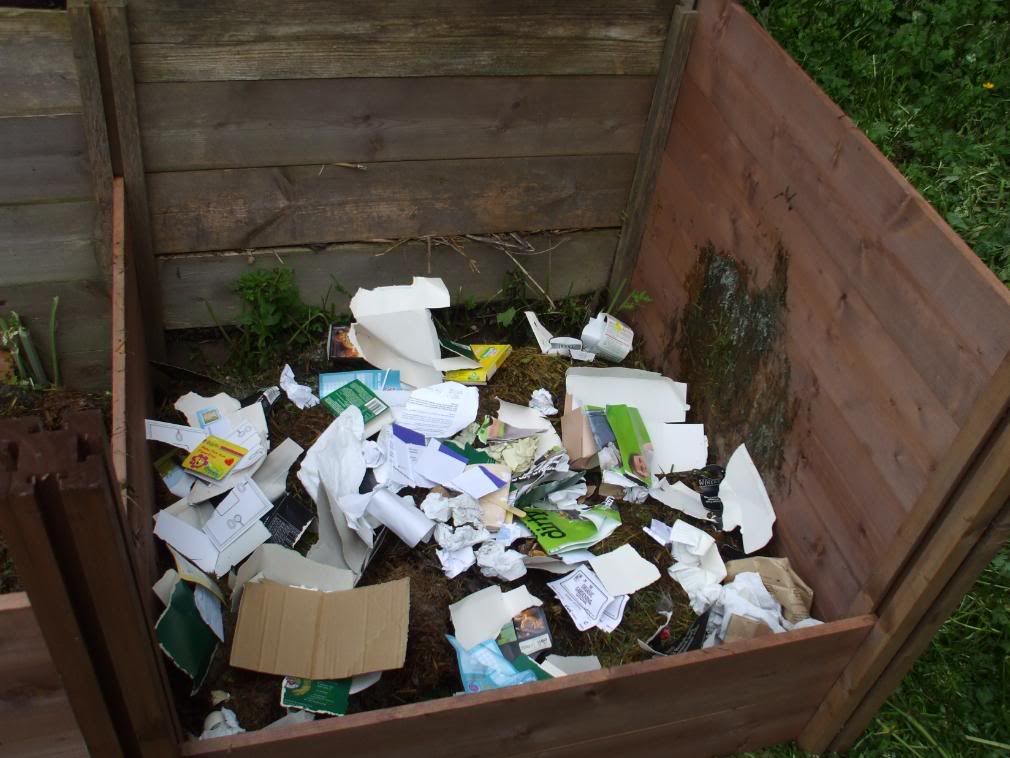


I started off with a layer of well composted bark shreddings from one of the storage bins then added a mix of paper bits and grass clippings. If you are starting a bin in a new area a shovel full of soil is a good idea as it introduces helpful bacteria and other organisms, but it's not essential as I find Mother Nature has an amazing power to sort this out for herself :-)
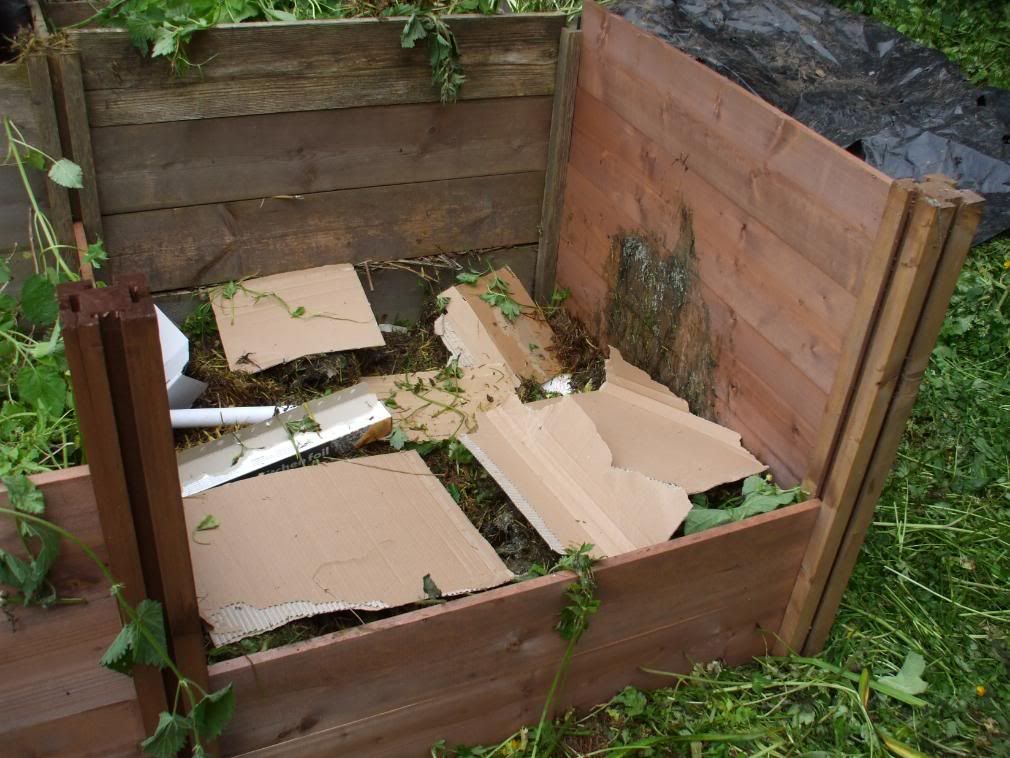


I then added a layer of grass clippings and a layer of very damp cardboard bits on the top. Other green material could be used instead of grass.
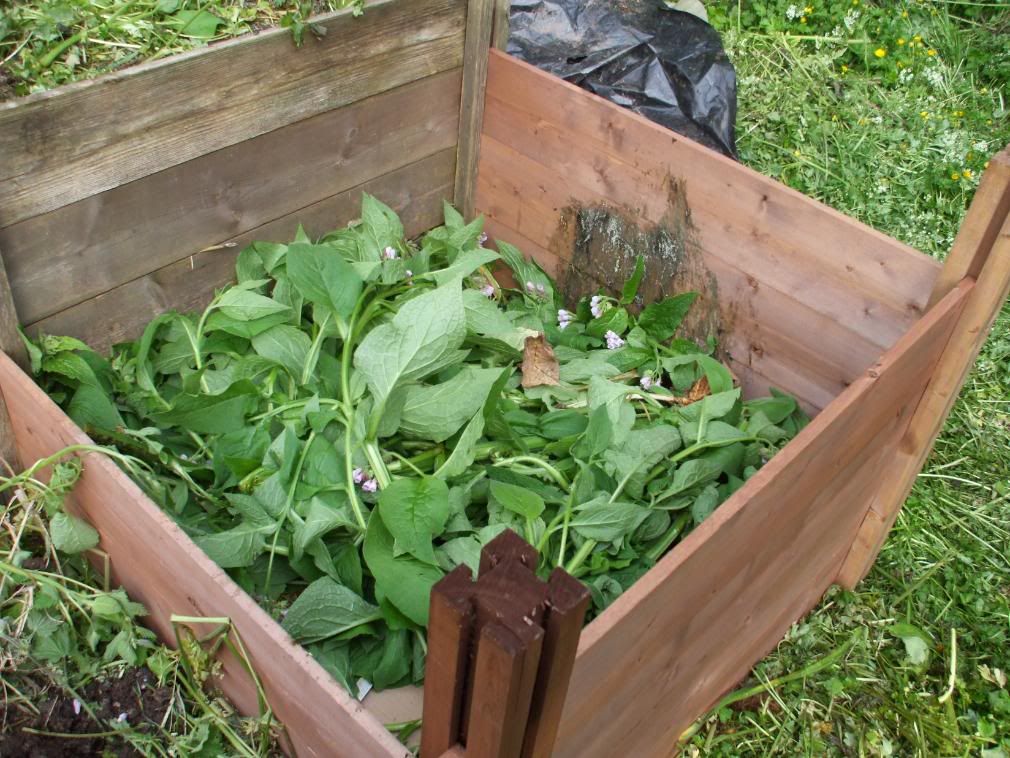


Then a layer of nettles (without the roots- they go in a "weedy " bin to make compost which is only used in the bottom of very deep holes...)and another layer of card on the top....
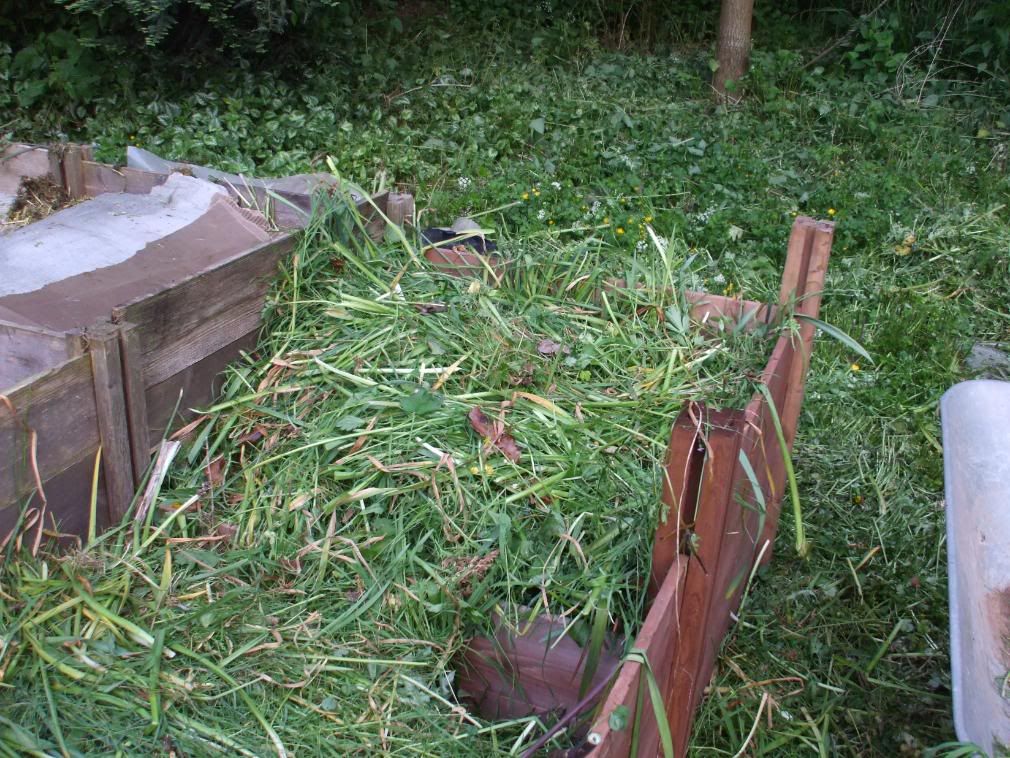


I repeated the layers of green stuff (nettles/comfrey/weeds/grass) and brown stuff (card/paper) until the bins were full to the brim.

The green items contain bacteria which will generate the initial heat that is required by the process. A healthy compost bin is a living ecosystem. By keeping a good mix of green and brown material you will provide the perfect conditions for a variety of fungi, insects and bacteria and can let them get on with all the hard work for you.

This mix will heat up FAST over the next few days, getting up to about 60 degrees centigrade in the middle, and then the material will cool down a little, and slump down. At this point I top the bins up again with alternating levels of green/brown stuff....

If this process is done correctly you don't actually NEED to do any digging out and mixing up (referred to as "turning" in compost speak) to get good compost. The turning process is there to get more air in to your compost material to aid the aerobic (air loving) bacteria in doing their job; but IF you have built the bin correctly, there will be air pockets in it still! you can turn it if you like and it WILL speed things up, but it shouldn't be actually required.

Making compost is really easy...especially if you can get a good pile of stuff together first!

Using this method, in spring and summer I can make acceptable compost in 8 weeks or so. It still needs to be stacked and left for a few more weeks as it is still biologically active and it would be a bit rich for plants "as made", but certainly it has finished composting and can be got out of the bins to make way for more fresh material.

I use the comfrey and nettles I grow (well which grow all over the place by themselves!) and add them to my compost heaps AND make fertiliser teas from them to feed my plants..(BTW Nettles are good BUT always make sure they are of known provenance!...else you might be importing herbicides and we all know where THAT can lead!))

If there is anyone out there who likes peat, well it is perfectly possible to make a good peat free substitute using grass cuttings and cardboard. This is called "Grassboarding" and if it's only grass and cardboard, it makes a wonderful peat like compost....if you have a source of grass and plenty of cardboard this is a very good thing to make. The result can be excellent compost, which is weed-free and does not contain large particles or lumps of material.

I know I have a lot of space and a lot of compost bins BUT all this will work if you only have one or two compost bins! In the picture at the end, can you see the black "Dalek" type bins? They are 220 l or 330 l capacity, and they make wonderful compost! And the "cold/cool" compost method works really well, it just takes longer and you may get the odd weed seed growing in it, so make sure you keep out any nasty weed seed heads you con't want carrying on. I am not soing anything differently here, to what I would do if I only had one or two bins, honest :-)


Compostwoman's top tips to maximise compost making!

To get the ideal compost mix you will roughly need a 50:50 mix
of both "green" and "brown" material in your bin.

I keep a few "browns" bins in the house which I use for all the little bitty bits of card, paper, tissue etc which is too scrappy to recycle, as well as a caddy for peelings, tea bags, coffee filters etc ec in the kitchen.
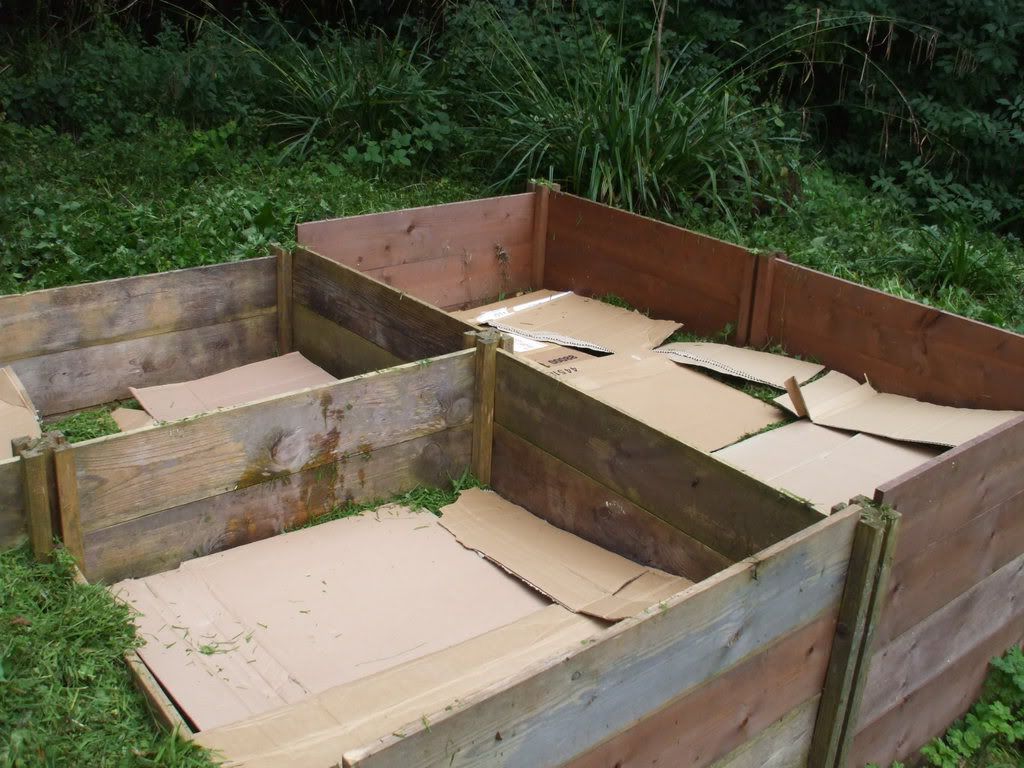


I am always on the lookout for cardboard sheets, from shops or from Freecycle.
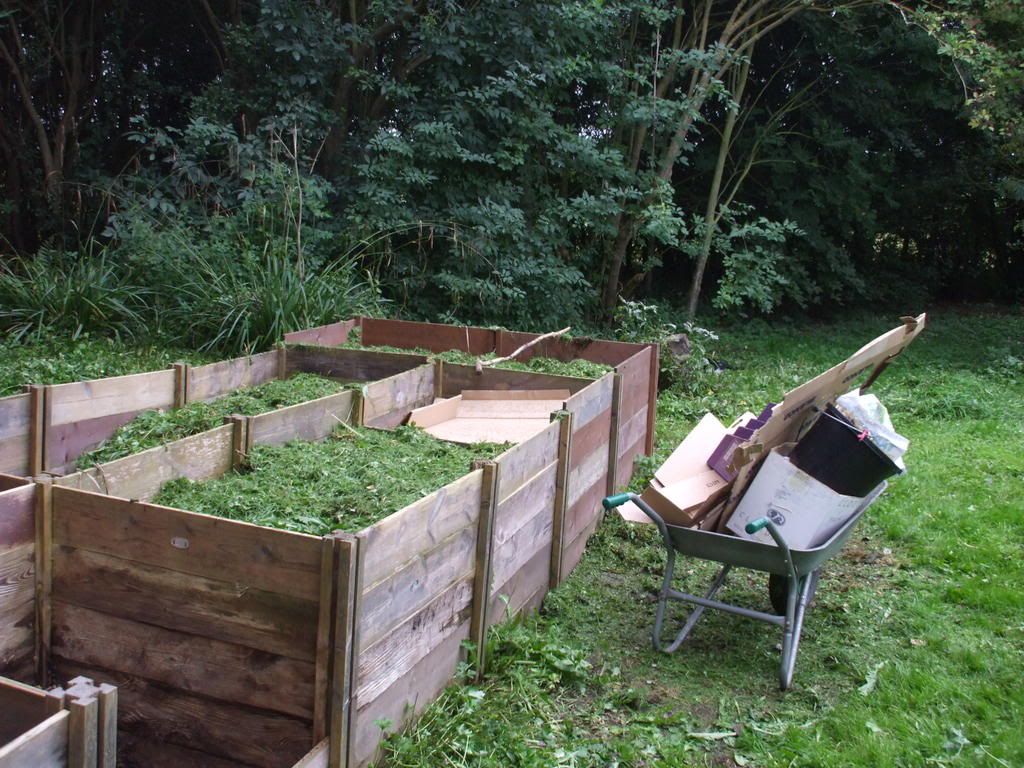


I stockpile various weeds and prunings and grass cuttings from the lawns, until I have a good quantity of raw materials to fill up the compost bins.

By composting everything and anything available it is possible to dramatically increase the amount of compost you produce.

‘GREENS’
● Fruit scraps (including citrus peel)
● Vegetable peelings
● Tea bags
● Old flowers
● Spent bedding plants
● Rhubarb leaves
● Comfrey leaves
● Nettles
● Young annual weeds (e.g. chickweed and speedwell)
● Pond algae and seaweed (in moderation)
● Coffee grounds and filter paper
● Grass cuttings
● Manure (horse, cow, pig, sheep, goat, chicken, rabbit – not too much as could become too wet)

Human urine is a very good activator!

‘BROWNS’
● Tissues, paper towels and napkins (unless they have been in contact with
meat or disease)
● Tumble dryer lint (from natural fibre clothes)
● Old natural fibre clothes (e.g. woolly jumpers or cotton t-shirts
– make sure you cut them into small pieces)
● Vacuum bag contents(as long as you have natural fibre carpets)
● Garden prunings
● Toilet and kitchen roll tubes,
● Woody clippings
● Dry leaves, twigs and hedge clippings
● Human and pet hair (slow to break down)
● Cotton threads/String(made from natural fibres)
● Feathers
● Wool
● Newspaper(scrunched up)
● Shredded confidential documents
● Straw and hay
● Vegetarian pet bedding
● Ashes from wood,paper, or lumpwood charcoal
● Sawdust and wood chippings
● Corn cobs and stalks
● Cereal boxes
● Corrugated cardboard packaging (scrunched up in small amounts)
● Pine needles and cones (although slow to compost don’t put too much in)
● Egg shells (but crush them first to speed up composting)
● Egg boxes (good as they trap air)
Paper and card is usually printed with fairly harmless inks now (in the UK at least) and I certainly don't worry too much about that, as anything in there is well diluted and a lot of inks are ( I understand) vegetable based now, with the glossinesss being from clay particles. But if you are worried, perhaps steer clear of very glossy magazines? They can go in the recycling bin


When the various ingredients you have put in your container or heap have turned into a dark brown, earthy smelling material, the composting process is complete. It is best left for a month or two to 'mature' before it is used as it is a bit biologically active to apply to plants straight away. Don't worry if your compost is not fine and crumbly. Even if it is lumpy or sticky with bits of twig and eggshell in it, it is still quite usable. It can always be sieved before using if you want. Any large bits can be put back into your new compost heap.
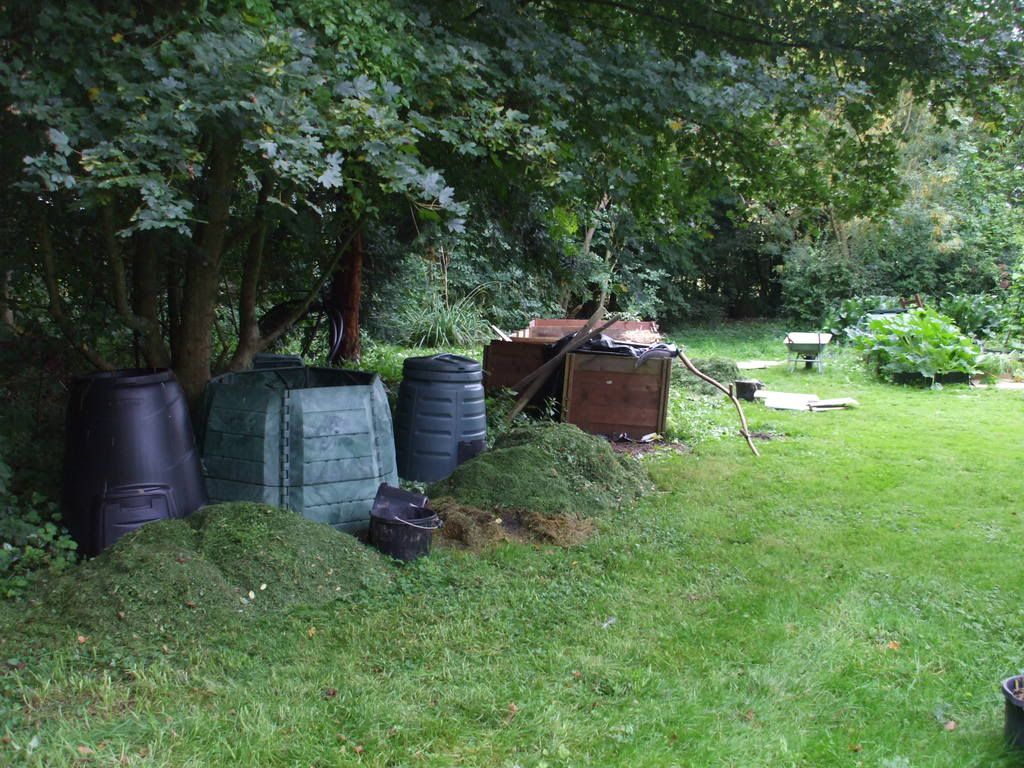


I hope this has been helpful, I shall talk in the next post about removing and using your compost and also how to make leaf mould.

Happy Composting!
UA-40361266-1